ADATA XPG SX8200 Pro 256GB Review — Entry-Level PCIe 3.0 NVMe (2026)
Quick answer
The ADATA XPG SX8200 Pro 256GB is a capable entry-level PCIe 3.0 NVMe SSD that excels in read performance while accepting write-speed compromises inherent to its capacity.
Read: 3500 MB/s Write: 1150 MB/s Endurance: 160 TBW Warranty: 5 years Interface: M.2 3.0 x 4
The ADATA XPG SX8200 Pro 256GB is an entry-capacity PCIe 3.0 NVMe SSD that trades write speed for affordability while keeping strong read performance.
Controller & Memory
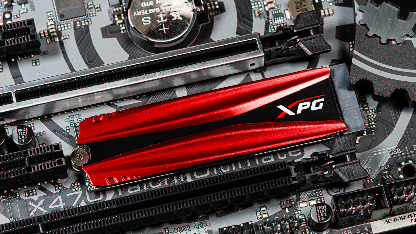
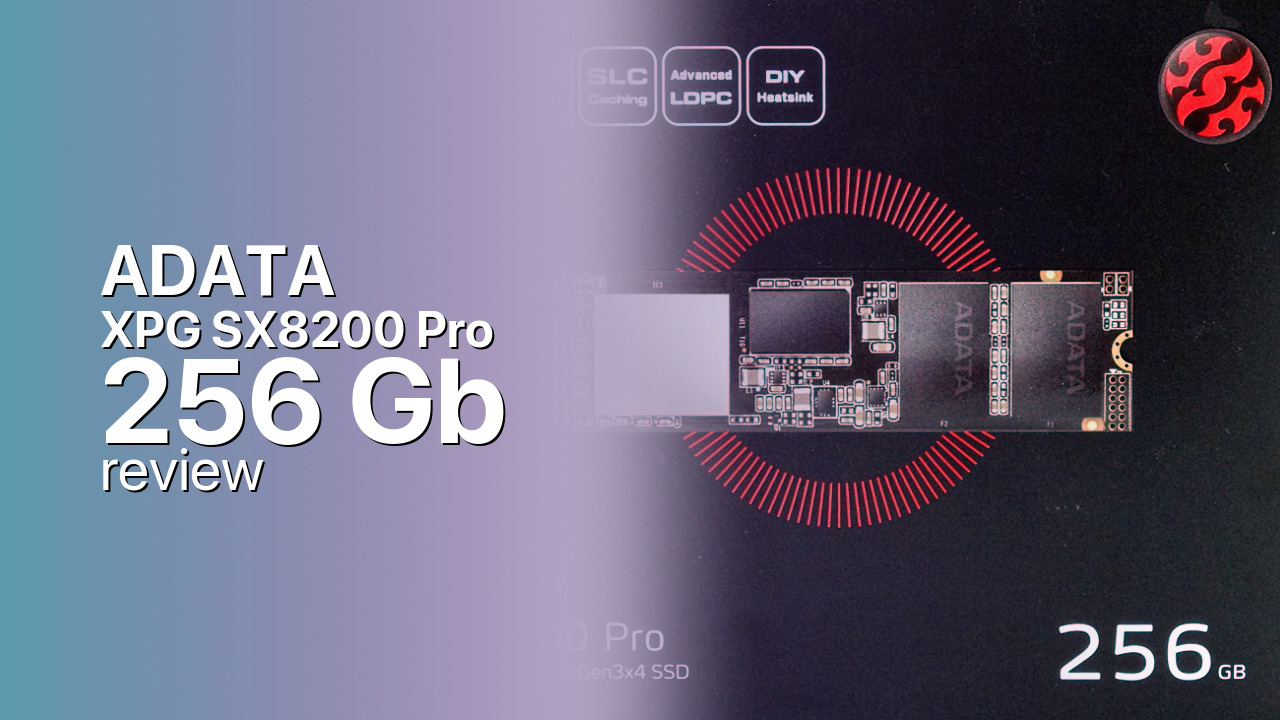
The 256 GB SX8200 Pro uses Silicon Motion's SM2262EN controller — an eight-channel PCIe 3.0 design — paired with Micron 64-layer 3D TLC NAND and 256 MB of Nanya DDR3L DRAM on an M.2 2280 PCB. Unlike the Gammix S11 Pro variant, the SX8200 Pro ships without a heatsink, relying instead on the motherboard's own thermal solution or ambient airflow. This makes it a better fit for thin laptops and compact builds where clearance matters.
ADATA rates the 256 GB model at 3,500 MB/s sequential reads and 1,150 MB/s sequential writes, with up to 290,000 random read IOPS. The read speed near-saturates the PCIe 3.0 x4 interface, but the write speed is significantly lower than larger SX8200 Pro capacities — the 512 GB and 1 TB models hit 3,000 MB/s and above. This is a common pattern in SSD product lines: smaller capacities have fewer NAND dies for parallel operation, and the 256 GB model's single-die or dual-die configuration bottlenecks write throughput.
The 256 GB variant carries a 160 TBW endurance rating and a five-year warranty. The SLC cache on this capacity is small — approximately 3 GB — which means sustained writes exhaust the buffer quickly and the drive drops to native TLC speeds. For boot-drive use and everyday desktop tasks, this is rarely an issue. It matters when copying large files or installing multiple games simultaneously.
The SX8200 Pro sits at the top of ADATA's PCIe 3.0 consumer lineup, above the Gammix S11 Pro series. It shares the same SM2262EN controller family but benefits from more aggressive firmware tuning. The drive has gone through internal component revisions over its production life — some batches ship with different NAND vendors — but ADATA's firmware maintains consistent performance across revisions.
At 256 GB, this drive targets budget builders, office upgrades from SATA, and secondary boot drives. Direct competitors include the Samsung 970 EVO 250GB (faster writes but more expensive), the Crucial P5 250GB (similar DRAM-equipped PCIe 3.0 drive), and the WD Blue SN550 250GB (DRAM-less HMB alternative that's slower but cheaper).
Storage Comparisons:
XPG SX8200 Pro Performance & Benchmarks
The ADATA XPG SX8200 Pro 256GB is rated at 3,500 MB/s sequential reads and 1,150 MB/s sequential writes, with up to 290,000 random read IOPS. In independent testing, CrystalDiskMark recorded sequential reads around 3,296 MB/s and writes near 630 MB/s — below the manufacturer's rated figures but still strong for a 256 GB PCIe 3.0 drive in the read dimension. AS-SSD awarded it a composite score of roughly 1,493, reflecting the write-speed limitation of this capacity.
ADATA XPG SX8200 Pro 256 GB vs M.2 3.0 x 4 peers
Switch between sequential throughput and random IOPS to see how this drive stacks up against other M.2 3.0 x 4 SSDs in our database. The highlighted bar is the drive on this page — click any other bar to open that drive.
- ADATA XPG SX8200 Pro 256 GB (this drive): 3,500 MB/s read, 1,150 MB/s write
- ADATA SX 8800 Pro 512 GB: 3,500 MB/s read, 2,700 MB/s write
- ADATA SX 8800 Pro 1 TB: 3,500 MB/s read, 2,700 MB/s write
- ADATA XPG Spectrix S40G RGB 256 GB: 3,500 MB/s read, 3,000 MB/s write
- ADATA XPG Spectrix S40G RGB 512 GB: 3,500 MB/s read, 3,000 MB/s write
The SM2262EN controller manages the Micron 64-layer TLC NAND through eight channels, with 256 MB of DDR3L DRAM storing the flash translation table. The dedicated DRAM gives this drive an advantage over DRAM-less HMB alternatives like the WD Blue SN550 in random I/O consistency, particularly during multitasking and background workloads. Random 4K multi-threaded performance reached approximately 127,000 IOPS for reads and 131,000 IOPS for writes in testing — respectable numbers for an entry-capacity drive.
The 256 GB model's most significant limitation is its SLC cache, which spans only about 3 GB. During sustained writes, the cache fills quickly — within seconds of a large file transfer — and the drive drops to native TLC write speeds. This is a fundamental trade-off of the 256 GB capacity: fewer NAND dies mean less space to allocate for pseudo-SLC buffering. For everyday use — OS boot, application launches, game loading — the small cache is invisible. It only becomes apparent during large file copies, drive cloning, or installing multiple games back-to-back, where write throughput falls well below the rated 1,150 MB/s after the first few gigabytes.
The read side of this drive is much stronger. At 3,500 MB/s rated (and roughly 3,300 MB/s measured), the SX8200 Pro 256GB reads at near-interface-ceiling speeds. This means game load times, file access, and OS responsiveness are competitive with larger, more expensive PCIe 3.0 drives. The write gap only matters for write-heavy workflows.
ADATA XPG SX8200 Pro vs Competitors
See how the XPG SX8200 Pro stacks up against other M.2 3.0 x 4 drives in our database:
Compare with rival drives:
Endurance, TBW & Warranty
ADATA covers the SX8200 Pro 256GB with a five-year limited warranty, rated at 160 TBW (terabytes written). At a typical consumer workload of 20 GB per day, the 160 TBW endurance translates to roughly 22 years before reaching the TBW limit — well beyond the warranty period. At a heavier 50 GB per day, the drive survives about 9 years. For most users, the five-year warranty expires long before endurance becomes a practical concern. The 160 TBW rating is standard for a 256 GB PCIe 3.0 drive. The Samsung 970 EVO 250GB carries a 150 TBW rating, and the Crucial P5 250GB is rated at 150 TBW as well, so the SX8200 Pro's endurance is slightly above average for this capacity class. ADATA's SSD Toolbox utility provides firmware updates, S.M.A.R.T. monitoring, and drive health diagnostics. The warranty is limited to the TBW cap or five years from purchase, whichever comes first.
ADATA XPG SX8200 Pro 256 GB Specifications
| Category | Value |
|---|---|
| Capacity [?] | 256 GB |
| Interface [?] | M.2 3.0 x 4 |
| Controller [?] | Silicon Motion SM2262EN |
| Memory type [?] | Micron 64-layer 3D TLC |
| DRAM [?] | NANYA 256MB DDR3L |
| Read speed (MB/s) [?] | 3500 |
| Write speed (MB/s) [?] | 1150 |
| Read IOPS [?] | 290000 |
| Write IOPS [?] | 250000 |
| Endurance (TBW) [?] | 160 |
| MTBF (million hours) [?] | 2 |
| Warranty (years) [?] | 5 |
Verdict: Is the XPG SX8200 Pro Worth It in 2026?
The ADATA XPG SX8200 Pro 256GB is a capable entry-level PCIe 3.0 NVMe SSD that excels in read performance while accepting write-speed compromises inherent to its capacity. It's a sensible choice for a budget boot drive or an upgrade from SATA storage, offering near-saturating PCIe 3.0 read speeds and the consistency benefits of a DRAM cache. Buyers who need fast sustained writes should step up to the 512 GB or 1 TB SX8200 Pro, which multiply write throughput by roughly three times. The Samsung 970 EVO 250GB offers faster writes at a higher price, while the WD Blue SN550 250GB undercuts it on cost but lacks DRAM. The SX8200 Pro 256GB earns its place as a well-rounded budget NVMe with strong reads and the DRAM cache that many competitors at this price drop.
+ Pros
- 3,500 MB/s near-saturates PCIe 3.0 x4 reads
- 256 MB Nanya DDR3L DRAM cache
- SM2262EN controller with proven reliability
- No heatsink — fits laptops and compact builds
- 160 TBW endurance for 256 GB capacity
- Five-year limited warranty
- Cons
- 1,150 MB/s writes much slower than larger capacities
- Only ~3 GB SLC cache exhausts quickly
- Write performance drops sharply after cache fills
- No heatsink included for thermal management
Buy this or similar SSD Storage:



Video Review
NVME Tested in Real World Performance featuring XPG SX8200 Pro 512GB