Kioxia Exceria Pro 1TB - PCIe 4.0 NVMe SSD Review (2026)
Quick answer
The Kioxia Exceria Pro 1 TB makes sense for buyers who want a flagship-tier PCIe 4.0 NVMe from an actual NAND manufacturer, especially as a PS5 expansion drive or a single-sided laptop upgrade where the slim 2280-S2 PCB fits enclosures that thicker double-sided drives cannot.
Read: 7300 MB/s Write: 6400 MB/s Endurance: 400 TBW Warranty: 5 years Interface: M.2 4.0 x 4
The Kioxia Exceria Pro 1TB is Kioxia's flagship consumer PCIe 4.0 NVMe - a 7,300 MB/s drive built around the company's own 112-layer BiCS5 TLC NAND and a Kioxia-branded E18-class controller.
Controller & Memory
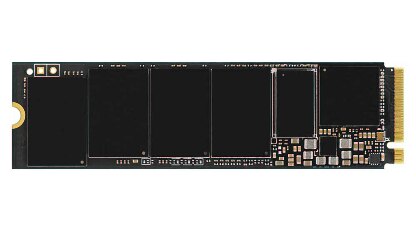
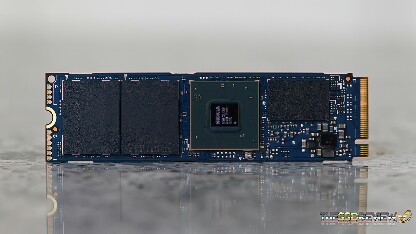
Under the hood, the Kioxia Exceria Pro 1 TB pairs a Kioxia-branded eight-channel controller (widely reported in independent teardowns as a re-badged Phison PS5018-E18) with four packages of Kioxia's own 112-layer BiCS5 3D TLC NAND. The drive carries a dedicated SK Hynix DDR4 DRAM cache buffer rather than relying on HMB, which keeps random write latency consistent under sustained NTFS metadata pressure. The PCB is a thin single-sided M.2 2280-S2-M, important because every chip sits on one side of the board: the Exceria Pro fits cleanly in the PS5 expansion slot, single-sided laptops, and the Steam Deck.
Kioxia ships the Exceria Pro in 1 TB and 2 TB capacities only. The brand skipped the 500 GB tier, and there is no 4 TB model. The 2 TB sibling reaches the same 7,300/6,400 MB/s peak speeds but doubles TBW endurance from 400 to 800 TB and rebalances random IOPS toward 800K reads and 1.3M writes. Kioxia's wider consumer line-up below this drive is the Exceria Plus G3 (PCIe 4.0 with smaller buffer) and the Exceria G2 (PCIe 3.0 entry tier); above it the company concentrates on the BG6 OEM series and CD8 enterprise drives.
The Exceria Pro 1 TB targets gamers, creators, and PS5 owners who want a name-brand NAND maker rather than a turnkey reference design. It ships without a heatsink, so desktop builders should pair it with a motherboard M.2 cooler and PS5 users must add a third-party heatsink that fits the 25 mm width and 11.25 mm height budget. Direct rivals at the same tier are the Samsung 990 Pro 1 TB, WD Black SN850X 1 TB, and Crucial T500 1 TB; the Kioxia matches them on rated reads, trails slightly on rated writes against the SN850X and 990 Pro, and undercuts both on rated random read IOPS, with real-world differences within a few percentage points on most workloads.
Storage Comparisons:
Exceria Pro Performance & Benchmarks
Manufacturer-rated sequential figures on the 1 TB Exceria Pro are 7,300 MB/s reads and 6,400 MB/s writes, with random performance up to 1,000,000 read and 1,100,000 write IOPS at high queue depths. Independent reviewers at Guru3D, KitGuru, TechPowerUp and eTeknix consistently measure CrystalDiskMark sequential reads within a few percent of the rated value, and 4K random reads in the same neighbourhood as the Samsung 990 Pro 1 TB and WD Black SN850X 1 TB.
Kioxia Exceria Pro 1 TB vs M.2 4.0 x 4 peers
Switch between sequential throughput and random IOPS to see how this drive stacks up against other M.2 4.0 x 4 SSDs in our database. The highlighted bar is the drive on this page — click any other bar to open that drive.
- Patriot Viper PV593 1 TB: 14,500 MB/s read, 14,000 MB/s write
- Patriot Viper PV593 2 TB: 14,500 MB/s read, 14,000 MB/s write
- Patriot Viper PV593 4 TB: 14,500 MB/s read, 14,000 MB/s write
- Patriot Viper PV573 2 TB: 14,000 MB/s read, 12,000 MB/s write
- Kioxia Exceria Pro 1 TB (this drive): 7,300 MB/s read, 6,400 MB/s write
Sustained writes are where this generation of PCIe 4.0 flagships separates. The 1 TB Exceria Pro maintains its 6,000+ MB/s peak only as long as the SLC pseudocache lasts; reviewers consistently find the dynamic cache exhausts after roughly 200-300 GB of continuous writing, after which the drive falls toward the underlying TLC direct-write rate of around 1,800-2,200 MB/s. For boot, application, and gaming workloads that profile is invisible; for video editing or large dataset moves, plan around the cache size. The drive runs hot under load - basic-tutorials.com flagged elevated temperatures during sustained workloads, so an M.2 heatsink is recommended. Real-world game load times track the Samsung 990 Pro and WD Black SN850X 1 TB to within a few hundred milliseconds, and DirectStorage GPU decompression works as expected on a supported PCIe 4.0 platform.
Kioxia Exceria Pro vs Competitors
See how the Exceria Pro stacks up against other M.2 4.0 x 4 drives in our database:
Compare with rival drives:
Endurance, TBW & Warranty
Kioxia rates the Exceria Pro 1 TB for 400 TB written (TBW) over a five-year warranty period, whichever comes first. At a heavy 50 GB/day write workload that endurance budget lasts roughly 22 years - longer than the drive's likely service life in any consumer build - and a typical desktop user writing 10-20 GB/day will never approach the limit. The published MTTF rating is 1.5 million hours, a population statistic rather than a per-drive promise. The 2 TB sibling doubles TBW to 800 TB, which is the better long-term fit for sustained creator workloads. The endurance lands a step below the Samsung 990 Pro 1 TB and WD Black SN850X 1 TB, which both quote 600 TBW at the same capacity. Kioxia handles consumer RMA through regional distributors in many markets rather than a direct factory exchange; check the warranty card or kioxia.com support portal before purchase.
Kioxia Exceria Pro 1 TB Specifications
| Category | Value |
|---|---|
| Capacity [?] | 1 TB |
| Interface [?] | M.2 4.0 x 4 |
| Controller [?] | Kioxia |
| Memory type [?] | Kioxia 112-L TLC |
| DRAM [?] | SK Hynix DDR4 |
| Read speed (MB/s) [?] | 7300 |
| Write speed (MB/s) [?] | 6400 |
| Read IOPS [?] | 1000000 |
| Write IOPS [?] | 1100000 |
| Endurance (TBW) [?] | 400 |
| MTBF (million hours) [?] | 1.5 |
| Warranty (years) [?] | 5 |
Verdict: Is the Exceria Pro Worth It in 2026?
The Kioxia Exceria Pro 1 TB makes sense for buyers who want a flagship-tier PCIe 4.0 NVMe from an actual NAND manufacturer, especially as a PS5 expansion drive or a single-sided laptop upgrade where the slim 2280-S2 PCB fits enclosures that thicker double-sided drives cannot. Anyone running heavy sustained-write workflows should step up to the 2 TB capacity for the doubled TBW, or look at the WD Black SN850X 2 TB or Samsung 990 Pro 2 TB for similar long-write profiles. The drive's main weaknesses are heat under sustained load without a heatsink and a smaller installed base than Samsung or WD, which can complicate RMA in some regions. As a primary PCIe 4.0 boot and game drive at 1 TB it remains competitive on speed and clearly above the field on NAND provenance.
+ Pros
- 7,300 MB/s sequential reads on PCIe 4.0
- Kioxia 112-layer BiCS5 TLC NAND
- Dedicated SK Hynix DDR4 DRAM cache
- Single-sided 2280-S2 PCB fits PS5 and thin laptops
- 400 TBW endurance with 5-year warranty
- 1,000,000 IOPS rated random reads
- Cons
- Runs hot under sustained writes without a heatsink
- No included heatsink in the retail box
- SLC cache exhausts after roughly 250 GB continuous writes
- Only 1 TB and 2 TB capacities, no 4 TB option
- Lower TBW than Samsung 990 Pro and WD SN850X at 1 TB
Buy this or similar SSD Storage:



Video Review
KIOXIA EXCERIA NVME SSD - Best Value NVME SSD?