Seagate FireCuda 530 1TB Review — Flagship PCIe 4.0 NVMe SSD (2026)
Quick answer
The Seagate FireCuda 530 1TB is the most balanced member of the FireCuda 530 family.
Read: 7300 MB/s Write: 6000 MB/s Endurance: 1755 TBW Warranty: 5 years Interface: M.2 4.0 x 4
The Seagate FireCuda 530 1TB is the sweet-spot capacity of Seagate's flagship PCIe 4.0 NVMe lineup, combining 7,300 MB/s reads, 6,000 MB/s writes, and Seagate's unique Rescue Data Recovery Services.
Controller & Memory
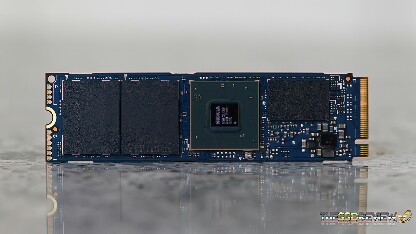
The Seagate FireCuda 530 1TB uses the Phison PS5018-E18-41 controller — one of the fastest PCIe 4.0 x4 NVMe platforms, running at up to 1,100 MHz. Micron's B47R FortisFlash 176-layer 3D TLC NAND provides the storage medium, backed by 1GB of DDR4-2666 DRAM for the flash translation layer. The drive ships in an M.2 2280 form factor on a double-sided PCB and supports NVMe 1.4.
Sequential performance is rated at up to 7,300 MB/s reads and 6,000 MB/s writes. The read speed essentially maxes out the PCIe 4.0 x4 interface, while the write speed is double that of the 500GB model (3,000 MB/s) thanks to having enough NAND packages to saturate the controller's channels. Random IOPS are rated at up to 800,000 reads and 1,000,000 writes.
The FireCuda 530 family spans 500GB, 1TB, 2TB, and 4TB. The 1TB endurance rating is 1,275 TBW, with the 2TB at 2,550 TBW and the 4TB at 3,000 TBW. A heatsink version is available, and the drive is widely recommended as a PS5 expansion drive.
Security features include AES-256 hardware encryption, LDPC error correction, and end-to-end data path protection. The FireCuda 530 also includes Seagate's Rescue Data Recovery Services — one free data recovery attempt within the warranty period, a feature no direct competitor offers.
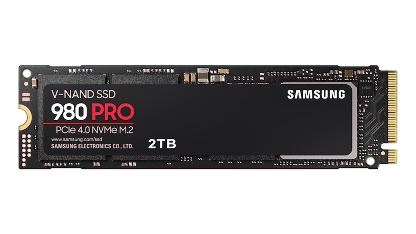
Direct rivals include the Samsung 980 Pro 1TB, the WD Black SN850X 1TB, and the Corsair MP600 Pro 1TB. All three use competitive controllers (Samsung's in-house Elpis, WD's SanDisk G2, and Phison E18 respectively), and the FireCuda 530 holds its own on sustained write performance and bundled services.
Storage Comparisons:
FireCuda 530 Performance & Benchmarks
The Seagate FireCuda 530 1TB is rated at up to 7,300 MB/s sequential reads and 6,000 MB/s sequential writes. The 7,300 MB/s read figure is essentially the ceiling of what PCIe 4.0 x4 can deliver, and the 6,000 MB/s writes put it in the upper tier of Gen4 SSDs — only the 4TB model (6,900 MB/s writes) is faster in the FireCuda 530 lineup.
Seagate FireCuda 530 1 TB vs M.2 4.0 x 4 peers
Switch between sequential throughput and random IOPS to see how this drive stacks up against other M.2 4.0 x 4 SSDs in our database. The highlighted bar is the drive on this page — click any other bar to open that drive.
- Patriot Viper PV593 1 TB: 14,500 MB/s read, 14,000 MB/s write
- Patriot Viper PV593 2 TB: 14,500 MB/s read, 14,000 MB/s write
- Patriot Viper PV593 4 TB: 14,500 MB/s read, 14,000 MB/s write
- Patriot Viper PV573 2 TB: 14,000 MB/s read, 12,000 MB/s write
- Seagate FireCuda 530 1 TB (this drive): 7,300 MB/s read, 6,000 MB/s write
Random IOPS are rated at up to 800,000 reads and 1,000,000 writes, significantly higher than the 500GB model's 400,000/700,000. The extra NAND dies in the 1TB configuration give the Phison E18 controller more parallel lanes for random operations.
StorageReview's review of the FireCuda 530 found it to be among the fastest PCIe 4.0 drives in both synthetic and application benchmarks. The drive's sustained write performance is particularly strong — Seagate's firmware tuning gives the FireCuda 530 a larger effective SLC cache than many competing E18 drives, meaning it holds near-peak write speeds for longer before the cache exhausts. In sustained transfer tests, the FireCuda 530 1TB maintained high throughput well past the point where competitors like the Corsair MP600 Pro would throttle.
For everyday desktop workloads — OS booting, application launches, game loading — the 1TB model is indistinguishable from the 2TB and 4TB variants. The write-speed advantage over the 500GB only becomes visible during large sequential transfers. Thermally, the FireCuda 530 runs warm under sustained loads, and the optional heatsink or an aftermarket cooler is recommended.
Seagate FireCuda 530 vs Competitors
See how the FireCuda 530 stacks up against other M.2 4.0 x 4 drives in our database:
Compare with rival drives:
Endurance, TBW & Warranty
Seagate covers the FireCuda 530 1TB with a five-year limited warranty and a 1,275 TBW endurance rating. At 1,275 TBW, the drive can absorb roughly 707 GB of writes per day over the full warranty period — far beyond any typical consumer workload. At a moderate 40 GB per day, the TBW ceiling would not be reached for over 87 years, so the five-year time-based warranty is the governing limit. The drive is rated for 2.0 million hours MTBF, a population-level reliability statistic common across the industry. Seagate's bundled Rescue Data Recovery Services adds one free data recovery attempt if the drive fails within the warranty period — a feature that competitors like Samsung, WD, and Corsair do not include, and that third-party providers charge $300–$1,500 for.
Seagate FireCuda 530 1 TB Specifications
| Category | Value |
|---|---|
| Capacity [?] | 1 TB |
| Interface [?] | M.2 4.0 x 4 |
| Controller [?] | Phison PS5018-E18 |
| Memory type [?] | Micron 176-layer 3D TLC |
| DRAM [?] | 1GB DDR4-2666 |
| Read speed (MB/s) [?] | 7300 |
| Write speed (MB/s) [?] | 6000 |
| Read IOPS [?] | 800000 |
| Write IOPS [?] | 1000000 |
| Endurance (TBW) [?] | 1755 |
| MTBF (million hours) [?] | 1.8 |
| Warranty (years) [?] | 5 |
Verdict: Is the FireCuda 530 Worth It in 2026?
The Seagate FireCuda 530 1TB is the most balanced member of the FireCuda 530 family. It delivers 7,300 MB/s reads and 6,000 MB/s writes — near the top of the PCIe 4.0 food chain — with 1,275 TBW endurance and Seagate's unique Rescue Data Recovery Services bundled in. The 1TB capacity avoids the write-speed penalty of the 500GB model while staying below the 2TB and 4TB premium. The double-sided PCB and Phison E16 thermals are the trade-offs. For a desktop boot drive, gaming library, or PS5 expansion with the optional heatsink, the FireCuda 530 1TB is a top-tier Gen4 choice that goes toe-to-toe with the Samsung 980 Pro and WD Black SN850X.
+ Pros
- 7,300 MB/s reads — near PCIe 4.0 x4 ceiling
- 6,000 MB/s writes — double the 500GB model
- 800,000 read IOPS — excellent random performance
- 1GB DRAM cache
- 1,275 TBW endurance
- 5-year warranty with free Rescue Data Recovery
- AES-256 hardware encryption
- Heatsink version available for PS5
- Cons
- Double-sided PCB — may not fit thin laptop slots
- Runs warm under sustained loads
- Write speed trails 4TB model (6,000 vs 6,900 MB/s)
- No hardware-based power-loss protection
Buy this or similar SSD Storage:
Video Review
Seagate Firecuda 530 NVMe SSD FINALLY Revealed