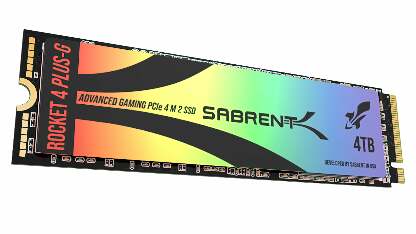
Sabrent Rocket Q4 4TB — High-Capacity PCIe 4.0 QLC NVMe (2026)
Quick answer
The Sabrent Rocket Q4 4 TB is a high-capacity value play that works best as a read-heavy storage drive.
Read: 4900 MB/s Write: 3500 MB/s Endurance: 800 TBW Warranty: 5 years Interface: M.2 4.0 x 4
The Sabrent Rocket Q4 4 TB is the flagship of the Q4 QLC lineup, where the massive NAND die count gives the Phison E16 controller enough parallelism to deliver near-TLC performance at the lowest price-per-GB in Sabrent's PCIe 4.0 portfolio.
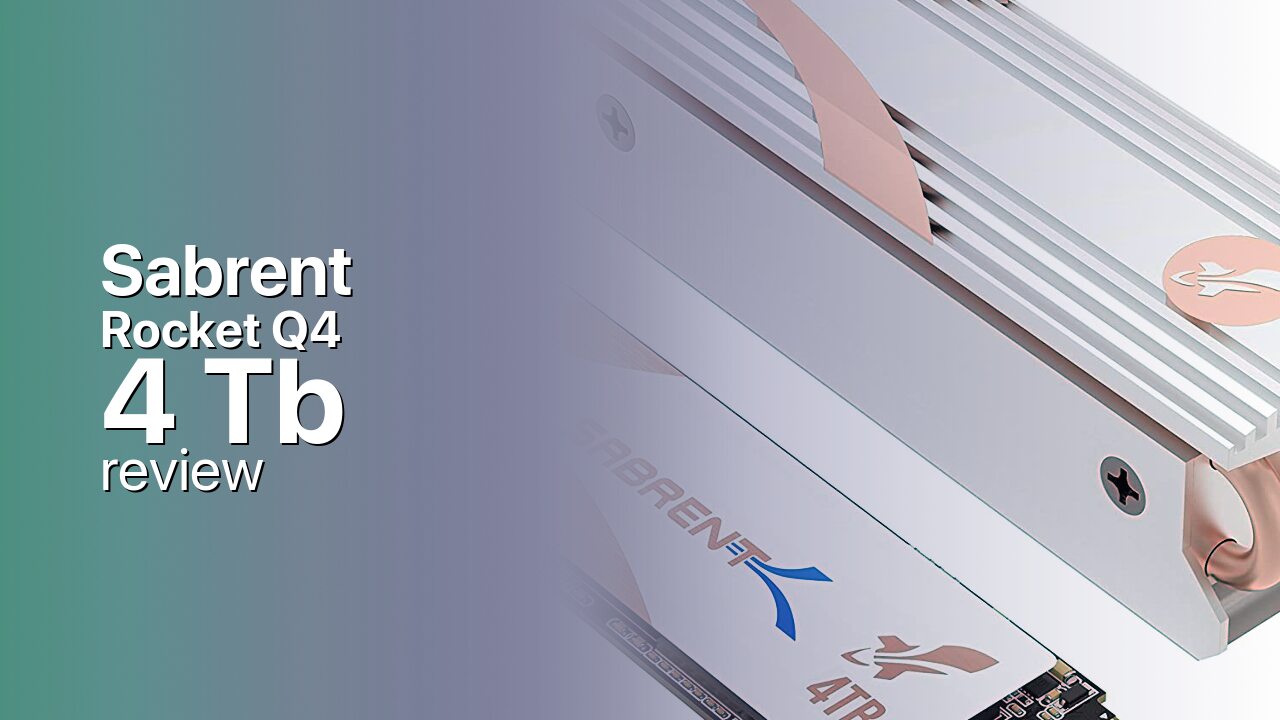
Controller & Memory
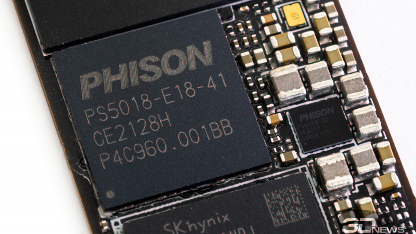
The 4 TB Rocket Q4 packs sixteen Micron 96L QLC NAND packages and DDR4 DRAM onto a double-sided M.2 2280 PCB, all controlled by the Phison PS5016-E16 8-channel controller. The dense NAND layout provides maximum interleaving, which is crucial for QLC — the more die the controller can address simultaneously, the better it can mask QLC's inherently slower write characteristics.
A double-sided PCB means this drive will not fit in single-sided-only M.2 slots, which rules out some thin laptops and compact systems. For desktops and the PS5 (bare drive, remove any add-on heatsink), compatibility is generally fine. The series also includes 1 TB and 2 TB variants with progressively lower performance specs.
At 4 TB, the Q4 competes with other high-capacity QLC drives like the Corsair MP600 Core 4 TB (identical platform) and the Crucial P3 Plus 4 TB (DRAM-less QLC, lower performance). TLC alternatives at 4 TB — Samsung 990 Pro, WD Black SN850X — command a significant price premium, which is the Q4's primary selling point: maximum capacity with DRAM cache and PCIe 4.0 speeds at a substantially lower cost than TLC.
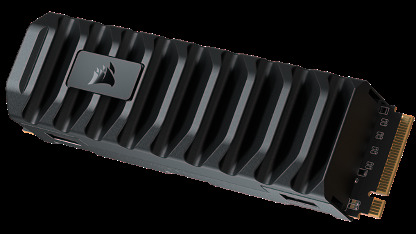
Sabrent offers the Q4 with an optional heatsink, recommended for systems without motherboard-integrated M.2 cooling. The E16 controller's 28 nm process generates meaningful heat under sustained workloads, and a heatsink helps prevent thermal throttling during extended write sessions.
Storage Comparisons:
Rocket Q4 Performance & Benchmarks
The 4 TB Q4 is rated at 4,900 MB/s sequential reads, 3,500 MB/s sequential writes, 630K random read IOPS, and 580K random write IOPS. These are the best numbers in the Q4 series, and the read performance is competitive with early TLC PCIe 4.0 drives. The large NAND array enables a generous pseudo-SLC cache — AnandTech's testing of E16+QLC at 4 TB found that the cache can absorb 100+ GB of writes before performance transitions to native QLC speeds.
Sabrent Rocket Q4 4 TB vs M.2 4.0 x 4 peers
Switch between sequential throughput and random IOPS to see how this drive stacks up against other M.2 4.0 x 4 SSDs in our database. The highlighted bar is the drive on this page — click any other bar to open that drive.
- Patriot Viper PV593 1 TB: 14,500 MB/s read, 14,000 MB/s write
- Patriot Viper PV593 2 TB: 14,500 MB/s read, 14,000 MB/s write
- Patriot Viper PV593 4 TB: 14,500 MB/s read, 14,000 MB/s write
- Patriot Viper PV573 2 TB: 14,000 MB/s read, 12,000 MB/s write
- Sabrent Rocket Q4 4 TB (this drive): 4,900 MB/s read, 3,500 MB/s write
After cache exhaustion, the 4 TB model's native QLC writes sustain at roughly 100–200 MB/s — better than the smaller capacities due to deeper interleaving, but still well below TLC's 500–1,500 MB/s. For read-heavy workloads (media playback, game loading, application use), the 4 TB Q4 performs identically to TLC alternatives. For sustained write-heavy tasks (large file transfers, video rendering), the QLC cliff is real but the large cache delays it significantly compared to the 1 TB model. Read-heavy desktop workloads see no practical difference from TLC alternatives.
Sabrent Rocket Q4 vs Competitors
See how the Rocket Q4 stacks up against other M.2 4.0 x 4 drives in our database:
Compare with rival drives:
Endurance, TBW & Warranty
The Sabrent Rocket Q4 4 TB is rated for 800 TBW endurance with a five-year warranty requiring registration within 90 days (one year without). At 800 TBW, you can write approximately 438 GB per day for five years before reaching the rated limit. For a 4 TB drive used primarily for storage and media — where most operations are reads — this is generous headroom. A typical user writes 20–50 GB/day to a storage drive, giving roughly 8–18 years of rated endurance. S.M.A.R.T. health monitoring and Acronis True Image are included. Registration within 90 days of purchase is required for the full warranty term.
Sabrent Rocket Q4 4 TB Specifications
| Category | Value |
|---|---|
| Capacity [?] | 4 TB |
| Interface [?] | M.2 4.0 x 4 |
| Controller [?] | Phison PS5016-E16 |
| Memory type [?] | Micron 96L QLC |
| DRAM [?] | DDR4 |
| Read speed (MB/s) [?] | 4900 |
| Write speed (MB/s) [?] | 3500 |
| Read IOPS [?] | 630000 |
| Write IOPS [?] | 580000 |
| Endurance (TBW) [?] | 800 |
| MTBF (million hours) [?] | 1800000 |
| Warranty (years) [?] | 5 |
Verdict: Is the Rocket Q4 Worth It in 2026?
The Sabrent Rocket Q4 4 TB is a high-capacity value play that works best as a read-heavy storage drive. The 4,900 MB/s reads and 630K random read IOPS are genuinely fast, and the large pseudo-SLC cache buffers most daily write workloads. The 800 TBW endurance is adequate for storage use, and the price-per-GB undercuts TLC alternatives meaningfully. The compromises — QLC write speeds after cache exhaustion and the double-sided PCB — are the cost of that value. For a game library drive, media server, or general storage where reads dominate, the Q4 4 TB is a practical choice. For write-intensive professional work, invest in TLC.
+ Pros
- 4,900 MB/s reads, 3,500 MB/s writes at 4 TB
- 630K random read IOPS — competitive with early TLC PCIe 4.0
- 800 TBW endurance with 5-year warranty
- DDR4 DRAM cache for consistent random I/O
- Large pseudo-SLC cache absorbs 100+ GB writes
- Low price-per-GB compared to TLC 4 TB alternatives
- Cons
- Double-sided PCB limits laptop compatibility
- QLC write speeds drop to 100–200 MB/s after cache fills
- Warranty drops to 1 year without registration
- No included heatsink
- NVMe 1.3 protocol, not NVMe 1.4
Buy this or similar SSD Storage:
Video Review
Sabrent Rocket Q4 PCIe 4.0 NVMe SSD Review