Seagate FireCuda 520 1TB NVMe SSD — PCIe 4.0 Reviewed (2026)
Quick answer
The Seagate FireCuda 520 1TB is a well-rounded first-generation PCIe 4.0 SSD that delivers the expected 5,000/4,400 MB/s read/write throughput with solid 1,800 TBW endurance.
Read: 5000 MB/s Write: 4400 MB/s Endurance: 1800 TBW Warranty: 5 years Interface: M.2 4.0 x 4
The Seagate FireCuda 520 1TB pairs a Phison E16 controller with Toshiba 96-layer TLC NAND to deliver 5,000 MB/s reads and 4,400 MB/s writes on PCIe 4.0 — the flagship capacity for this first-gen Gen4 drive.
Controller & Memory
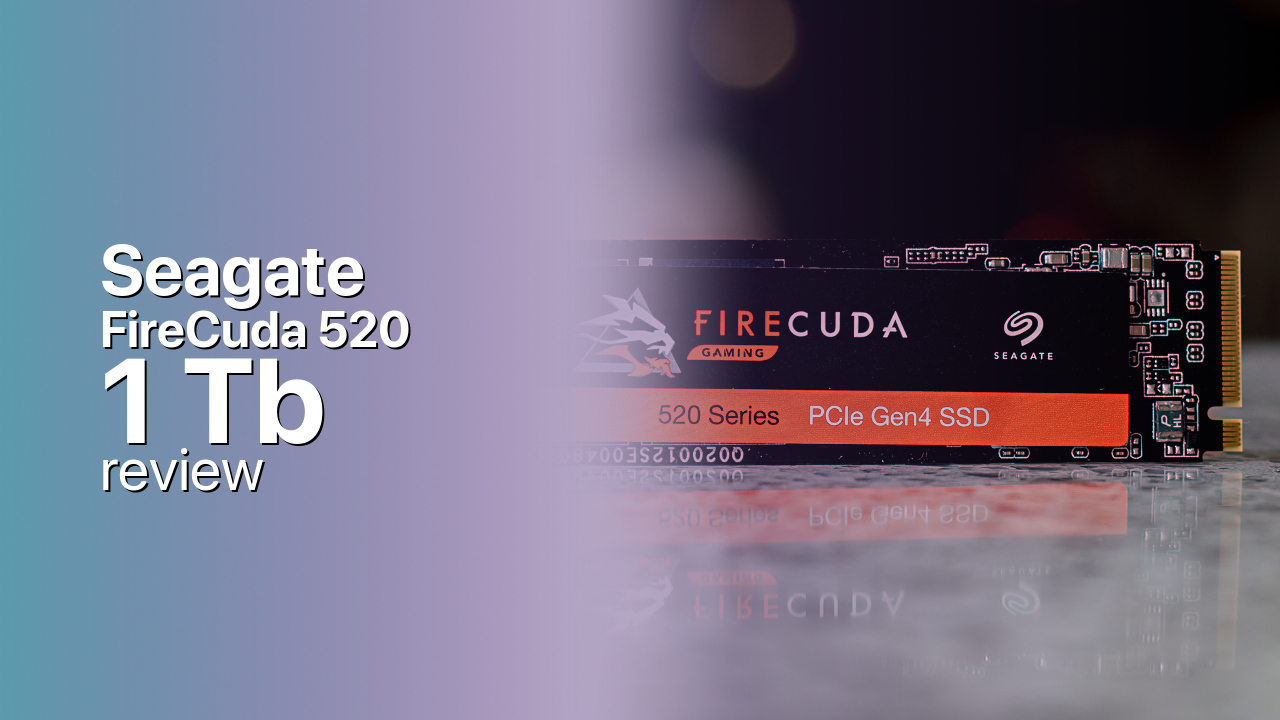
The FireCuda 520 family uses the Phison PS5016-E16 eight-channel controller, Toshiba BiCS4 96-layer 3D TLC NAND, and a Nanya DDR4 DRAM buffer — the reference combination for first-wave PCIe 4.0 consumer SSDs. On the 1TB model, Seagate specifies sequential reads of 5,000 MB/s and writes of 4,400 MB/s, with up to 760K random read IOPS and 700K random write IOPS. Those numbers are competitive with other Phison E16 drives like the Corsair MP600 and Sabrent Rocket NVMe 4.0.
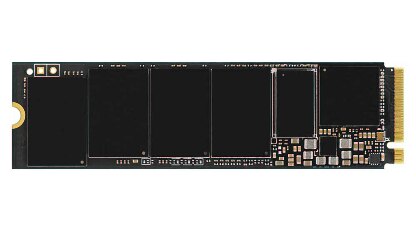
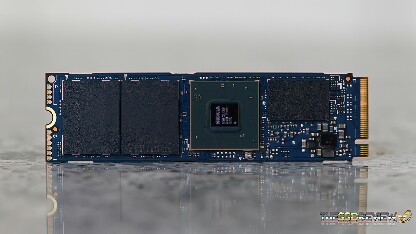
The drive uses a dynamic SLC cache strategy that Seagate tunes with custom firmware, and endurance comes in at 1,800 TBW with a 1.8 million hour MTBF rating. The 1TB model is double-sided, with two NAND packages on each side of the PCB along with the controller and a single DRAM chip. No heatsink is included in the box. The black PCB is a visual step up from the older FireCuda 510's blue board.
The FireCuda 520 is backward compatible with PCIe 3.0 x4 slots, where reads drop to roughly 3,400 MB/s. To unlock the full 5,000 MB/s, an AMD X570 or B550 platform (or any PCIe 4.0-capable Intel board) is required. At 1TB, the drive targets enthusiasts who want to populate a Gen4 slot without paying the premium that newer PCIe 5.0 drives command. Direct alternatives include the Corsair MP600 1TB and the GIGABYTE AORUS Gen4 1TB.
Storage Comparisons:
FireCuda 520 Performance & Benchmarks
The FireCuda 520 1TB is rated for 5,000 MB/s sequential reads and 4,400 MB/s sequential writes. Independent reviewers consistently find the drive hits or comes within 5–10 percent of those numbers in CrystalDiskMark and ATTO benchmarks, with real-world writes typically landing around 4,100–4,300 MB/s. The 760K read IOPS and 700K write IOPS represent best-case queue-depth 32 results — at lower queue depths more typical of desktop use, expect 40–60K 4K random read IOPS.
Seagate FireCuda 520 1 TB vs M.2 4.0 x 4 peers
Switch between sequential throughput and random IOPS to see how this drive stacks up against other M.2 4.0 x 4 SSDs in our database. The highlighted bar is the drive on this page — click any other bar to open that drive.
- Patriot Viper PV593 1 TB: 14,500 MB/s read, 14,000 MB/s write
- Patriot Viper PV593 2 TB: 14,500 MB/s read, 14,000 MB/s write
- Patriot Viper PV593 4 TB: 14,500 MB/s read, 14,000 MB/s write
- Patriot Viper PV573 2 TB: 14,000 MB/s read, 12,000 MB/s write
- Seagate FireCuda 520 1 TB (this drive): 5,000 MB/s read, 4,400 MB/s write
The dynamic SLC cache absorbs burst writes at full speed. Once the cache fills — which happens after roughly 100–150 GB of sustained writing on the 1TB model — write speeds drop to native TLC levels around 1,500–2,000 MB/s. For a boot drive handling mostly reads and short writes, this cache behavior is invisible. It becomes relevant only during large file transfers or disk cloning. Gaming load times on PCIe 4.0 are essentially indistinguishable from any other Gen4 drive; the bottleneck shifts to game engine asset streaming rather than raw SSD throughput.
Seagate FireCuda 520 vs Competitors
See how the FireCuda 520 stacks up against other M.2 4.0 x 4 drives in our database:
Compare with rival drives:
Endurance, TBW & Warranty
Seagate rates the FireCuda 520 1TB at 1,800 TBW with a five-year limited warranty, expiring when either threshold is reached. At 40 GB of writes per day — a heavy desktop workload — the endurance budget covers roughly 123 years, far exceeding the warranty period. The 1.8 million hour MTBF figure is a population-level reliability statistic, not a guarantee for any individual drive. Seagate provides the free SeaTools SSD utility for health monitoring, firmware updates, and secure erase. Warranty claims go through Seagate's direct RMA process. The five-year coverage is standard for this segment and matches competitors like Corsair and Sabrent.
Seagate FireCuda 520 1 TB Specifications
| Category | Value |
|---|---|
| Capacity [?] | 1 TB |
| Interface [?] | M.2 4.0 x 4 |
| Controller [?] | Phison PS5016-E16 |
| Memory type [?] | Toshiba 3D TLC |
| DRAM [?] | Nanya DDR4 |
| Read speed (MB/s) [?] | 5000 |
| Write speed (MB/s) [?] | 4400 |
| Read IOPS [?] | 760000 |
| Write IOPS [?] | 700000 |
| Endurance (TBW) [?] | 1800 |
| MTBF (million hours) [?] | 1.8 |
| Warranty (years) [?] | 5 |
Verdict: Is the FireCuda 520 Worth It in 2026?
The Seagate FireCuda 520 1TB is a well-rounded first-generation PCIe 4.0 SSD that delivers the expected 5,000/4,400 MB/s read/write throughput with solid 1,800 TBW endurance. It makes the most sense for AMD X570 or B550 owners who want to populate a Gen4 M.2 slot without overspending on a newer Phison E18 or PCIe 5.0 drive. The main drawback is that Phison E16 drives have been surpassed by second-gen Gen4 controllers (Phison E18, Samsung Elpis) that push past 7,000 MB/s reads. Builders who want the latest performance ceiling should look at the Samsung 980 Pro or WD Black SN850 instead. For the price-sensitive Gen4 buyer, the FireCuda 520 1TB remains a competent and reliable choice.
+ Pros
- 5,000 MB/s reads and 4,400 MB/s writes on PCIe 4.0
- 1,800 TBW endurance with 5-year warranty
- Toshiba 96-layer 3D TLC with Phison E16 controller
- Nanya DDR4 DRAM cache for consistent performance
- Black PCB aesthetic improvement over FireCuda 510
- Backward compatible with PCIe 3.0 slots
- Cons
- Surpassed by Phison E18 drives with 7,000+ MB/s reads
- No included heatsink
- Double-sided PCB limits thin-laptop compatibility
- Requires PCIe 4.0 platform for full speed
- First-gen Gen4 — idle power higher than newer controllers
Buy this or similar SSD Storage:
Video Review
Could This Be The FASTEST NVMe SSD Yet? Seagate Firecuda 520