Acer Predator GM7000 1 TB Review — PCIe 4.0 NVMe SSD (2026)
Quick answer
The Acer Predator GM7000 1 TB is the right pick if you want a top-tier Gen 4 NVMe drive on the Innogrit Rainier platform and you value the bundled graphene thermal pad over the bare-PCB or aluminium-heatsink alternatives.
Read: 7400 MB/s Write: 6700 MB/s Endurance: 600 TBW Warranty: 5 years Interface: M.2 4.0 x 4
The Acer Predator GM7000 1 TB is the entry capacity of Biwin\xe2\x80\x99s Acer-branded flagship Gen 4 NVMe \xe2\x80\x94 an Innogrit IG5236 drive with a graphene heat-spreader and a 7,400 MB/s rated read.
Controller & Memory
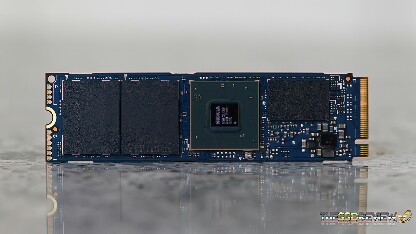
The Acer Predator GM7000 1 TB is a top-of-Gen-4 NVMe drive sold under the Acer Predator gaming brand and built by Biwin under licence. The hardware is the well-known reference combination: a 12 nm Innogrit IG5236 (Rainier) eight-channel controller, Micron 176-layer 3D TLC NAND, a Nanya DDR4 DRAM cache, and a single-sided M.2 2280 PCB topped with a custom graphene-laced thermal pad that Acer markets as reducing operating temperature by roughly 18 °C versus a bare drive. AES encryption and 4 K LDPC error correction are supported on the controller.
At 1 TB the GM7000 hits the family’s headline rated specifications without compromise on sequential numbers — 7,400 MB/s reads and 6,700 MB/s writes — because the IG5236 has more than enough NAND parallelism at this capacity to saturate the PCIe 4.0 x4 bus. The random IOPS scale lower at 1 TB (700,000 read and write) than on the 2 TB sibling, where the larger NAND pool gives the controller more channels to interleave. The closest direct rivals at 1 TB are the Lexar NM800 PRO 1 TB (same Innogrit Rainier platform, slightly different firmware), the ADATA Legend 960 1 TB (Silicon Motion SM2264, similar TLC), and the Samsung 990 Pro 1 TB (in-house, slightly higher random reads). The GM7000’s case is the bundled graphene thermal pad and a competitive 600 TBW endurance figure; its weakness against the 990 Pro is firmware feature breadth.
The drive is a fit for desktop PCIe 4.0 builds, modern laptops with a single-sided M.2 slot, and the PS5 expansion bay where it clears Sony’s sequential-read threshold by a wide margin. The graphene thermal pad keeps the controller cool enough to maintain rated performance under sustained writes without needing a separate motherboard M.2 heatsink in most desktop builds.
Storage Comparisons:
Predator GM7000 Performance & Benchmarks
Acer rates the Predator GM7000 1 TB at up to 7,400 MB/s sequential reads and 6,700 MB/s sequential writes on a PCIe 4.0 x4 link, with random IOPS of up to 700,000 reads and 700,000 writes. Those numbers put the 1 TB inside the top tier of Gen 4 drives on sequential throughput and on par with the Lexar NM800 PRO 1 TB — the two drives share the underlying Innogrit Rainier platform and run nearly indistinguishable on every benchmark suite. The 1 TB random IOPS are lower than the 2 TB sibling because the smaller NAND pool gives the controller fewer channels to interleave.
Acer Predator GM7000 1 TB vs M.2 4.0 x 4 peers
Switch between sequential throughput and random IOPS to see how this drive stacks up against other M.2 4.0 x 4 SSDs in our database. The highlighted bar is the drive on this page — click any other bar to open that drive.
- Patriot Viper PV593 1 TB: 14,500 MB/s read, 14,000 MB/s write
- Patriot Viper PV593 2 TB: 14,500 MB/s read, 14,000 MB/s write
- Patriot Viper PV593 4 TB: 14,500 MB/s read, 14,000 MB/s write
- Patriot Viper PV573 2 TB: 14,000 MB/s read, 12,000 MB/s write
- Acer Predator GM7000 1 TB (this drive): 7,400 MB/s read, 6,700 MB/s write
The SLC cache behaviour is the usual 1 TB caveat. The dynamic SLC region is smaller than on the 2 TB capacity, and independent reviewers consistently find sustained writes drop noticeably partway through 300-plus-gigabyte continuous transfers, settling into roughly the 1 to 1.5 GB/s range once the cache exhausts. The graphene thermal pad keeps the controller within its safe operating band on those long pours, so the speed drop is purely a NAND-direct-mode effect rather than thermal throttling. For everyday Windows use, gaming, OS work, and most photo or audio production that does not matter; for video editors writing multi-hundred-gigabyte project dumps the 2 TB GM7000 is the better tool with its larger cache.
Acer Predator GM7000 vs Competitors
See how the Predator GM7000 stacks up against other M.2 4.0 x 4 drives in our database:
Compare with rival drives:
Endurance, TBW & Warranty
Acer rates the Predator GM7000 1 TB at 600 TBW (terabytes written) over a 5-year limited warranty, whichever limit is reached first. That endurance figure is in line with mainstream flagship TLC NVMe drives at 1 TB \xe2\x80\x94 matching the WD Black SN850X 1 TB and Samsung 990 Pro 1 TB at the same value \xe2\x80\x94 and corresponds to roughly 330 GB of host writes every single day for the full warranty window. At a more realistic 30 GB/day workload the rated endurance corresponds to over 50 years of nominal life before the counter is exhausted. Acer does not publish a consumer MTBF figure for this model, and warranty service is handled via Biwin / Acer Predator RMA with proof of purchase. The TBW scales with capacity inside the family: 1,300 TBW at 2 TB and 2,600 TBW at 4 TB on the larger SKUs.
Acer Predator GM7000 1 TB Specifications
| Category | Value |
|---|---|
| Capacity [?] | 1 TB |
| Interface [?] | M.2 4.0 x 4 |
| Controller [?] | Innogrit IG5236 |
| Memory type [?] | Micron 3D TLC |
| DRAM [?] | Nanya DDR4 |
| Read speed (MB/s) [?] | 7400 |
| Write speed (MB/s) [?] | 6700 |
| Read IOPS [?] | 700000 |
| Write IOPS [?] | 700000 |
| Endurance (TBW) [?] | 600 |
| MTBF (million hours) [?] | 2000000 |
| Warranty (years) [?] | 5 |
Verdict: Is the Predator GM7000 Worth It in 2026?
The Acer Predator GM7000 1 TB is the right pick if you want a top-tier Gen 4 NVMe drive on the Innogrit Rainier platform and you value the bundled graphene thermal pad over the bare-PCB or aluminium-heatsink alternatives. Skip it if you prefer the Samsung Magician software stack and the slightly higher random read IOPS of the Samsung 990 Pro 1 TB, or if you need a longer-supported firmware track record from a first-party brand. The closest direct alternative on the same platform is the Lexar NM800 PRO 1 TB, which is functionally identical and usually competes on price; the WD Black SN850X 1 TB is the in-house-controller alternative with a known PS5-certified heatsink SKU. For a 1 TB Gen 4 NVMe in a PS5 or a 2026 gaming desktop the GM7000 is one of the easiest mid-flagship recommendations.
+ Pros
- 7,400 MB/s sequential reads on PCIe 4.0
- 600 TBW endurance with 5-year warranty
- Graphene thermal pad keeps controller cool
- Innogrit Rainier IG5236 eight-channel controller
- Nanya DDR4 DRAM cache on board
- Single-sided M.2 2280 fits laptops and PS5
- Cons
- 6,700 MB/s writes trail the 2 TB sibling
- 1 TB SLC cache smaller for sustained writes
- 700K random read IOPS below 2 TB and 4 TB
- Limited Windows utility software
- Branding overlap with similar Biwin Innogrit drives
Buy this or similar SSD Storage:



Video Review
Acer Predator GM7000 1 TB SSD (HOW TO INSTALL ON DESKTOP PC)