Samsung 970 EVO 250GB NVMe SSD Review (2026)
Quick answer
The Samsung 970 EVO 250GB was a solid mainstream PCIe 3.0 NVMe SSD at launch, but the 970 EVO Plus 250GB offers higher writes (2,300 vs 1,500 MB/s), updated NAND, and a larger TurboWrite cache at a similar price.
Read: 3500 MB/s Write: 1500 MB/s Endurance: 150 TBW Warranty: 5 years Interface: M.2 3.0 x 4
The Samsung 970 EVO 250GB was Samsung's mainstream PCIe 3.0 NVMe entry point before the EVO Plus refresh, pairing 64-layer TLC V-NAND with a Phoenix controller at a budget-friendly capacity.
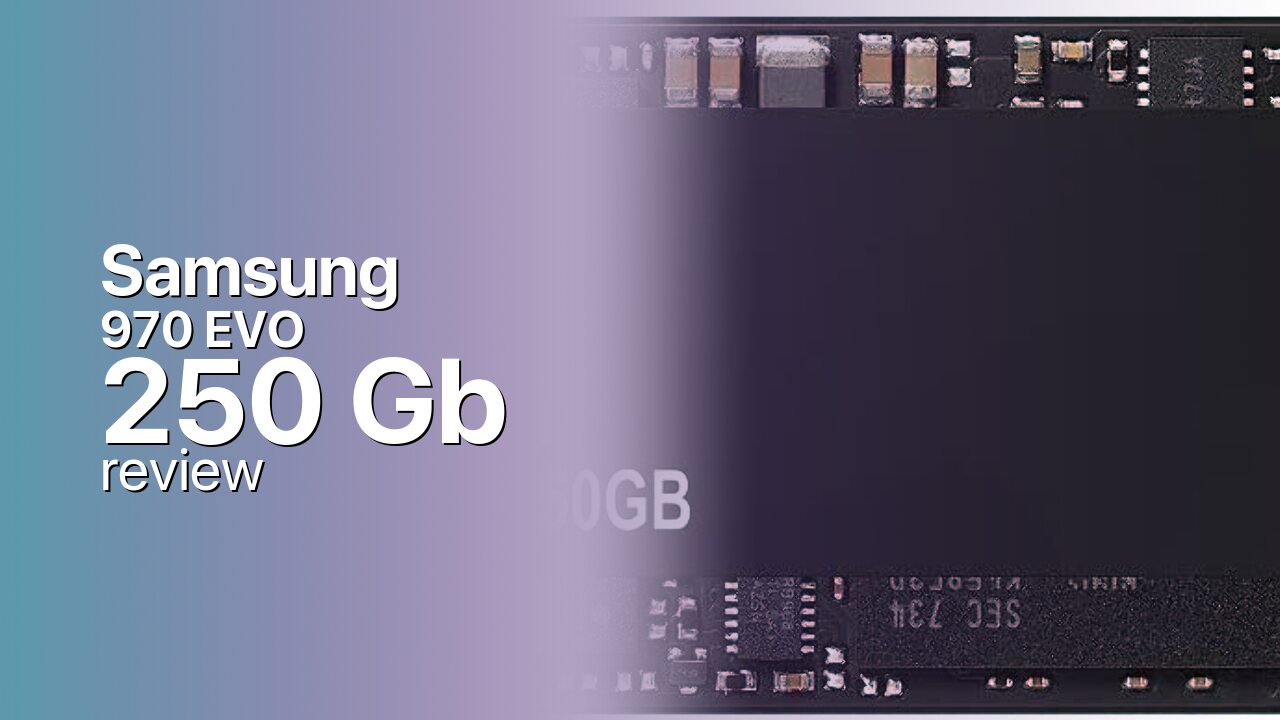
Controller & Memory
Under the label, the 250 GB 970 EVO uses Samsung's Phoenix controller with 512 MB of LPDDR4 DRAM and 64-layer (V4) 3D TLC V-NAND. This is the previous generation of NAND compared to the 92-layer V5 flash in the 970 EVO Plus. The 250 GB model is the slowest in the family, rated at 3,500 MB/s sequential reads but only 1,500 MB/s sequential writes, compared to 2,300 MB/s on the 970 EVO Plus 250GB.
Random performance peaks at 500,000 read IOPS and 450,000 write IOPS. The TurboWrite SLC cache is 4 GB fixed plus up to 9 GB Intelligent, small enough that sustained transfers hit TLC-native speeds quickly. Endurance is 150 TBW with a five-year warranty.
As a boot drive or OS install target the 970 EVO 250GB is adequate, but it has been superseded by the 970 EVO Plus which offers higher writes and updated NAND at a similar price point. The single-sided M.2 2280 form factor fits laptops and desktops. Direct competitors include the WD Blue SN500 and the Crucial MX500 M.2, though the latter uses SATA.
Storage Comparisons:
970 EVO Performance & Benchmarks
The 250 GB 970 EVO is rated for 3,500 MB/s sequential reads and 1,500 MB/s sequential writes, the lowest write speed in the 970 EVO family. Random performance reaches up to 500,000 read IOPS and 450,000 write IOPS. The TurboWrite cache is 4 GB fixed plus up to 9 GB Intelligent TurboWrite, and once it fills, direct-to-TLC writes drop to roughly 300 MB/s.
Samsung 970 EVO 250 GB vs M.2 3.0 x 4 peers
Switch between sequential throughput and random IOPS to see how this drive stacks up against other M.2 3.0 x 4 SSDs in our database. The highlighted bar is the drive on this page — click any other bar to open that drive.
- Samsung 970 EVO 250 GB (this drive): 3,500 MB/s read, 1,500 MB/s write
- ADATA SX 8800 Pro 512 GB: 3,500 MB/s read, 2,700 MB/s write
- ADATA SX 8800 Pro 1 TB: 3,500 MB/s read, 2,700 MB/s write
- ADATA XPG Spectrix S40G RGB 256 GB: 3,500 MB/s read, 3,000 MB/s write
- ADATA XPG Spectrix S40G RGB 512 GB: 3,500 MB/s read, 3,000 MB/s write
For everyday desktop use as a boot drive, the 1,500 MB/s write ceiling rarely matters since most OS-level writes are small and random. Game loads benefit from the full 3,500 MB/s read speed. Independent reviewers found the 970 EVO 250GB competitive with other PCIe 3.0 drives at its capacity tier when it launched, but the 970 EVO Plus significantly outperforms it in write-heavy workloads.
Samsung 970 EVO vs Competitors
See how the 970 EVO stacks up against other M.2 3.0 x 4 drives in our database:
Compare with rival drives:
Endurance, TBW & Warranty
Samsung covers the 970 EVO 250GB with a five-year limited warranty terminated at 150 TBW. At a typical consumer write workload of 20 GB per day, 150 TBW translates to over 20 years of use, making endurance a non-concern for a boot drive. Samsung's Magician software tracks TBW consumption and drive health in real time.
Samsung 970 EVO 250 GB Specifications
| Category | Value |
|---|---|
| Capacity [?] | 250 GB |
| Interface [?] | M.2 3.0 x 4 |
| Controller [?] | Samsung Phoenix |
| Memory type [?] | Samsung TLC |
| DRAM [?] | 512MB LPDDR4 |
| Read speed (MB/s) [?] | 3500 |
| Write speed (MB/s) [?] | 1500 |
| Read IOPS [?] | 500000 |
| Write IOPS [?] | 450000 |
| Endurance (TBW) [?] | 150 |
| MTBF (million hours) [?] | 1.5 |
| Warranty (years) [?] | 5 |
Verdict: Is the 970 EVO Worth It in 2026?
The Samsung 970 EVO 250GB was a solid mainstream PCIe 3.0 NVMe SSD at launch, but the 970 EVO Plus 250GB offers higher writes (2,300 vs 1,500 MB/s), updated NAND, and a larger TurboWrite cache at a similar price. Buyers choosing between the two should pick the EVO Plus unless the original EVO is significantly discounted. The WD Blue SN570 250GB is a worthy alternative at this capacity tier.
+ Pros
- 3,500 MB/s sequential reads saturate PCIe 3.0
- Samsung Phoenix controller with LPDDR4 DRAM
- Single-sided M.2 2280 fits laptops
- 150 TBW endurance with five-year warranty
- Cons
- Only 1,500 MB/s sequential writes
- Superseded by the faster 970 EVO Plus
- Small 4 GB base TurboWrite cache
- TLC write speed drops to ~300 MB/s after cache
Buy this or similar SSD Storage:



Video Review
Samsung 970 EVO NVMe M.2 SSD Review