Corsair MP600 Pro LPX 4 TB PS5 SSD Review (2026)
Quick answer
The Corsair MP600 Pro LPX 4 TB is the right pick for buyers who want a turnkey PlayStation 5 expansion that clears Sony's clearance and speed requirements out of the box, or a desktop 4 TB NVMe where the included heatsink saves a separate heatsink purchase.
Read: 7100 MB/s Write: 6800 MB/s Endurance: 3000 TBW Warranty: 5 years Interface: M.2 4.0 x 4
The Corsair MP600 Pro LPX 4 TB is the PS5-focused member of Corsair's Phison E18 line, pairing full 7,100 MB/s Gen4 throughput with 3,000 TBW of endurance and a pre-installed low-profile heatsink.
Controller & Memory
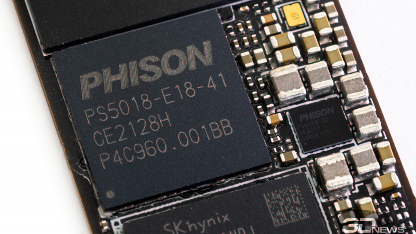
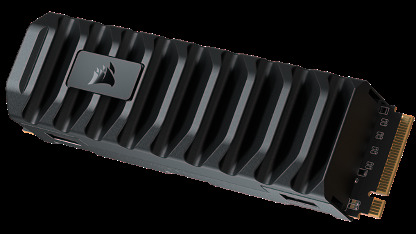
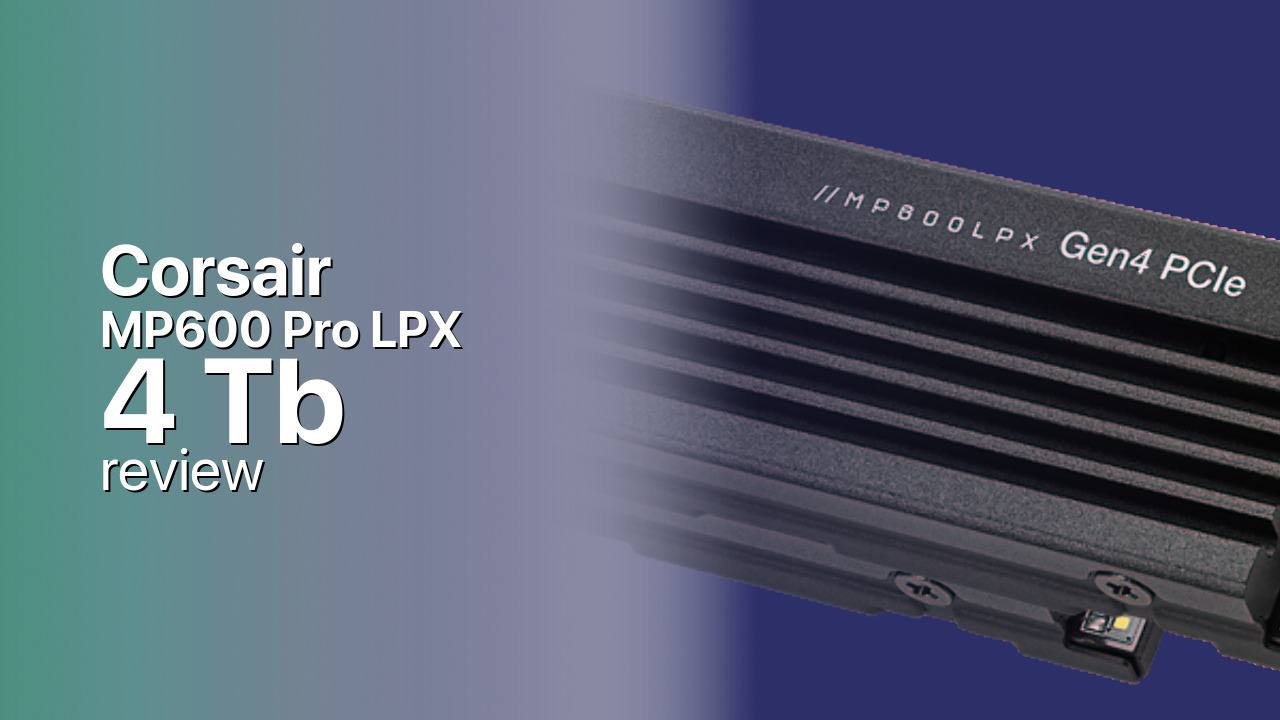
The Corsair MP600 Pro LPX 4 TB runs Corsair's go-to flagship Gen4 recipe: Phison's eight-channel PS5018-E18 controller, Micron 3D TLC NAND, a discrete DRAM cache buffer, and a dynamic pseudo-SLC cache that grows with capacity. Over a PCIe 4.0 x4 link it is rated for 7,100 MB/s sequential reads, 6,800 MB/s writes, up to 1,000,000 random read IOPS and 1,200,000 random write IOPS, which is the full E18 envelope rather than a cut-down capacity bin. Where the LPX differs from the bare MP600 Pro XT is the cooler: a low-profile aluminium heatsink bonded to the drive and sized to clear the PlayStation 5 expansion slot's 11.25 mm height limit. That single design choice is the reason the LPX exists as a separate SKU.
The LPX family spans 500 GB, 1 TB, 2 TB and 4 TB, and unlike some Gen4 drives Corsair does not gate write speed behind capacity. Every size from 1 TB upward hits the same 6,800 MB/s writes, so the 4 TB adds space and endurance rather than extra throughput. Endurance scales roughly linearly: about 700 TBW on the 1 TB, 1,400 TBW on the 2 TB, and 3,000 TBW on this 4 TB, which is the figure that matters most for a drive this size. The 4 TB also carries the largest SLC cache in the line, so under a long contiguous write it holds full speed the longest before settling to the native Micron TLC rate.
Compatibility is the LPX's strongest selling point and its main constraint. For a PS5 it is essentially a turnkey upgrade: 7,100 MB/s reads clear Sony's 5,500 MB/s recommendation comfortably, the heatsink fits the bay, and 4 TB holds a very large digital library. For a desktop the same heatsink helps, but it is permanently attached, so on boards with built-in M.2 shrouds buyers may have to leave the shroud off, and the double-sided PCB at 4 TB rules out most thin laptops. Against direct rivals, the WD Black SN850X 4 TB trades slightly higher peak reads for a shorter 2,400 TBW rating, the Samsung 990 Pro 4 TB leads on raw sequentials and IOPS, and the Seagate FireCuda 530 4 TB matches the LPX on speed with a touch more endurance, but none of those ship with a guaranteed PS5-clearance heatsink in the box.
Storage Comparisons:
MP600 Pro LPX Performance & Benchmarks
On the 4 TB MP600 Pro LPX, sequential reads hit 7,100 MB/s and writes reach 6,800 MB/s over a PCIe 4.0 x4 link, with random performance rated at up to 1,000,000 read IOPS and 1,200,000 write IOPS. Those are the full Phison E18 numbers, identical to what the 1 TB and 2 TB LPX deliver, so stepping up to 4 TB buys capacity and endurance rather than extra peak speed.
Corsair MP600 Pro LPX 4 TB vs M.2 4.0 x 4 peers
Switch between sequential throughput and random IOPS to see how this drive stacks up against other M.2 4.0 x 4 SSDs in our database. The highlighted bar is the drive on this page — click any other bar to open that drive.
- Patriot Viper PV593 1 TB: 14,500 MB/s read, 14,000 MB/s write
- Patriot Viper PV593 2 TB: 14,500 MB/s read, 14,000 MB/s write
- Patriot Viper PV593 4 TB: 14,500 MB/s read, 14,000 MB/s write
- Patriot Viper PV573 2 TB: 14,000 MB/s read, 12,000 MB/s write
- Corsair MP600 Pro LPX 4 TB (this drive): 7,100 MB/s read, 6,800 MB/s write
In daily use the LPX behaves like every well-sorted E18 drive: game load times are indistinguishable from any other top-tier PCIe 4.0 SSD, because the CPU and asset decompression set the pace long before the storage does. The payoff shows up in sequential workloads such as copying a 100 GB project folder, scrubbing 4K footage, or feeding DirectStorage-enabled titles that stream textures straight from the SSD. There the 4 TB's larger pseudo-SLC cache is the real advantage: it absorbs sustained writes at full 6,800 MB/s speed for longer than the smaller capacities before the cache empties and writes drop to the native Micron TLC rate, typically a fraction of the headline number.
Independent reviewers consistently place the E18 plus Micron TLC combination within a few percent of the WD Black SN850X and Samsung 990 Pro on the usual benchmark suites, close enough that the bundled heatsink and street price, not raw sequentials, should decide. The fixed low-profile heatsink does its job: under sustained load the LPX holds its rated speeds without throttling in a well-ventilated bay.
Corsair MP600 Pro LPX vs Competitors
See how the MP600 Pro LPX stacks up against other M.2 4.0 x 4 drives in our database:
Compare with rival drives:
Endurance, TBW & Warranty
Corsair covers the MP600 Pro LPX 4 TB with a five-year limited warranty that ends early only if the 3,000 TBW endurance rating is exceeded, whichever comes first. That 3,000 TBW figure is the highest in the LPX line, which scales from roughly 700 TBW on the 1 TB through 1,400 TBW on the 2 TB. At a heavy 50 GB of writes per day, a serious content-creation workload, the drive would need around 164 years to wear out the NAND, and even a professional pipeline pushing 200 GB a day would take more than four decades, so in practice the warranty term expires long before the flash does. Corsair rates the drive at 2,000,000 hours MTBF, but treat that as a population-reliability statistic across a large fleet of drives rather than a guarantee that any single unit will run for that long. RMAs are handled through Corsair directly or via the retailer of purchase.
Corsair MP600 Pro LPX 4 TB Specifications
| Category | Value |
|---|---|
| Capacity [?] | 4 TB |
| Interface [?] | M.2 4.0 x 4 |
| Controller [?] | Phison PS5018-E18 |
| Memory type [?] | Micron 3D TLC |
| DRAM [?] | 1GB DRAM |
| Read speed (MB/s) [?] | 7100 |
| Write speed (MB/s) [?] | 6800 |
| Read IOPS [?] | 1000000 |
| Write IOPS [?] | 1200000 |
| Endurance (TBW) [?] | 3000 |
| MTBF (million hours) [?] | 2000000 |
| Warranty (years) [?] | 5 |
Verdict: Is the MP600 Pro LPX Worth It in 2026?
The Corsair MP600 Pro LPX 4 TB is the right pick for buyers who want a turnkey PlayStation 5 expansion that clears Sony's clearance and speed requirements out of the box, or a desktop 4 TB NVMe where the included heatsink saves a separate heatsink purchase. Skip it for a laptop, where the double-sided 4 TB PCB and the permanent heatsink will not fit, and skip it on a motherboard whose M.2 slots all sit under non-removable shrouds. The closest alternative is the WD Black SN850X 4 TB, which trades the bundled heatsink for slightly higher peak reads and a shorter 2,400 TBW rating, while the Samsung 990 Pro 4 TB with heatsink is the pick if raw sequentials matter more than cost. We rate the LPX 4 TB a solid, no-surprises Gen4 drive whose value lives entirely in the pre-installed PS5-compatible heatsink, so the premium is worth paying only when that heatsink saves a separate purchase.
+ Pros
- 7,100 MB/s reads over PCIe 4.0
- 3,000 TBW endurance, highest in the LPX line
- Pre-installed PS5-compatible low-profile heatsink
- Phison E18 with discrete DRAM cache
- 1.2 million random write IOPS rated
- Five-year warranty, TBW-limited
- Cons
- Permanent heatsink will not fit laptop slots
- Double-sided 4 TB PCB restricts thin-laptop use
- Heatsink cannot be removed for motherboard shrouds
- Premium over bare E18 drives without a heatsink
- Peak Gen4 speed is invisible in most current games
Buy this or similar SSD Storage:



Video Review
Corsair MP600 PRO LPX SSD PS5 Expansion Tests