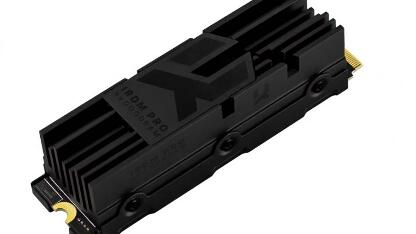
Seagate FireCuda 530R 2TB Review — Reliability in the Flagship Bracket (2026)
Quick answer
The Seagate FireCuda 530R 2TB suits buyers who treat an SSD as long-term infrastructure: a game library and scratch disk that will take daily abuse for years, backed by 2,400 TBW of rated endurance, a 5-year warranty and in-lab data recovery.
Read: 7400 MB/s Write: 6900 MB/s Endurance: 2400 TBW Warranty: 5 years Interface: M.2 4.0 x 4
The Seagate FireCuda 530R 2TB is the capacity Tom's Hardware reviewed and praised as reliably consistent — 7,400 MB/s reads, 2,400 TBW of endurance and Rescue recovery bundled.

Controller & Memory
The Seagate FireCuda 530R 2TB, launched in 2024, is the capacity that anchored the line's independent coverage: Tom's Hardware's review of this exact model concluded it is a surprisingly capable drive that delivers a reliable, consistent experience with few downsides. The platform is flagship Gen4 by way of the FireCuda 530 — Phison's PS5018-E18-41 controller, 2 GB of SK hynix DDR4 DRAM matching the ideal 1 GB-per-terabyte ratio, and Kioxia BiCS6 162-layer TLC rated for 3,000 program-erase cycles over PCIe 4.0 x4. Ratings reach 7,400 MB/s sequential reads, 6,900 MB/s writes and 1,300K random IOPS both ways, the latter figure sitting well above typical E18 drives.
Endurance is the 530R's thesis. At 2,400 TBW, Tom's Hardware counts roughly double what competing Gen4 drives offer per terabyte, and the family scales 1,100, 2,400 and 5,050 TBW from 1 TB to 4 TB while writes step down 7,000, 6,900 and 6,800 MB/s. The PCB is double-sided, so very thin slots need a clearance check, and the heatsink-equipped variant — model numbers ending in 073 — is the clean route into a PS5. Microsoft DirectStorage is supported, and the 5-year warranty carries 3-year Rescue Data Recovery Services.
In the flagship bracket the rivals are Samsung's 990 Pro, the WD Black SN850X and Crucial's T500. Tom's Hardware's listed cons were power efficiency that is merely average and an aging platform; the counterweight is coverage no direct rival matches. Neither complaint changes the endurance story at this capacity, and Tom's Hardware's review of this exact capacity carried the family's verdict.
Storage Comparisons:
Firecuda 530R Performance & Benchmarks
Seagate rates the 2 TB 530R at 7,400 MB/s sequential reads, 6,900 MB/s writes and 1,300K random read/write IOPS — manufacturer figures on the proven E18 platform, and this is the capacity Tom's Hardware verified as reliably consistent in testing. Everyday desktop behavior — boots, game loading, application launches — is indistinguishable from any other top-band Gen4 drive, while the 2 GB DRAM cache and the unusually high IOPS rating keep random responsiveness strong when the drive doubles as a scratch disk or a busy game library.
Seagate Firecuda 530R 2 TB vs M.2 4.0 x 4 peers
Switch between sequential throughput and random IOPS to see how this drive stacks up against other M.2 4.0 x 4 SSDs in our database. The highlighted bar is the drive on this page — click any other bar to open that drive.
- Patriot Viper PV593 1 TB: 14,500 MB/s read, 14,000 MB/s write
- Patriot Viper PV593 2 TB: 14,500 MB/s read, 14,000 MB/s write
- Patriot Viper PV593 4 TB: 14,500 MB/s read, 14,000 MB/s write
- Patriot Viper PV573 2 TB: 14,000 MB/s read, 12,000 MB/s write
- Seagate Firecuda 530R 2 TB (this drive): 7,400 MB/s read, 6,900 MB/s write
Sustained writing is the traditional E18 examination, and the 530R passes it respectably: Tom's Hardware lists decent sustained writes among the review's pros, alongside criticism of average power efficiency on the aging platform. A pseudo-SLC cache absorbs everyday bursts, and very large transfers eventually settle toward native TLC rates as on any cache-managed Gen4 drive — but the 2,400 TBW endurance rating means the flash behind the cache is rated for far more daily writing than the class norm. For game loading the practical gap against a Samsung 990 Pro or WD Black SN850X is imperceptible; where this drive separates is repeated large-file work backed by warranty coverage.
Seagate Firecuda 530R vs Competitors
See how the Firecuda 530R stacks up against other M.2 4.0 x 4 drives in our database:
Compare with rival drives:
Endurance, TBW & Warranty
The 2 TB model carries 2,400 TBW of endurance — roughly 0.66 drive writes per day across the 5-year term, and about double what competing Gen4 drives rate per terabyte according to Tom's Hardware. At 20 GB of writes per day the budget would take more than 320 years to exhaust, so the warranty term is the realistic limit. The 5-year limited warranty is paired with 3-year Rescue Data Recovery Services, Seagate's in-lab recovery plan for data lost to drive failure — coverage that has no equivalent from Samsung or WD at this tier. The rated 1.8 million hours MTBF is a fleet-level population statistic rather than a per-unit promise. Claims run through Seagate's standard support channels with proof of purchase.
Seagate Firecuda 530R 2 TB Specifications
| Category | Value |
|---|---|
| Capacity [?] | 2 TB |
| Interface [?] | M.2 4.0 x 4 |
| Controller [?] | Phison PS5018-E18- 8 Channel |
| Memory type [?] | Kioxia 162-L TLC |
| DRAM [?] | Yes |
| Read speed (MB/s) [?] | 7400 |
| Write speed (MB/s) [?] | 6900 |
| Read IOPS [?] | 1300000 |
| Write IOPS [?] | 1300000 |
| Endurance (TBW) [?] | 2400 |
| MTBF (million hours) [?] | 1800000 |
| Warranty (years) [?] | 5 |
Verdict: Is the Firecuda 530R Worth It in 2026?
The Seagate FireCuda 530R 2TB suits buyers who treat an SSD as long-term infrastructure: a game library and scratch disk that will take daily abuse for years, backed by 2,400 TBW of rated endurance, a 5-year warranty and in-lab data recovery. Skip it for thin laptops, where the double-sided PCB complicates clearance, or if power efficiency is a laptop-critical priority. Samsung's 990 Pro and WD Black SN850X remain the defaults for pure gaming pedigree; Crucial's T500 counters on efficiency. Tom's Hardware's verdict — reliably consistent with few downsides — is the honest summary of this capacity. Few drives at any capacity carry warranty coverage this deep, which is precisely the buyer this variant was built for.
+ Pros
- 7,400/6,900 MB/s rated speeds
- 2,400 TBW endurance rating, double the class norm
- 1,300K rated random IOPS both ways
- 2 GB DDR4 DRAM, 1 GB per terabyte
- 5-year warranty plus 3-year Rescue recovery
- Heatsink variant certified-ready for PS5 installs
- Cons
- Double-sided PCB complicates thin-laptop fit
- Aging E18 platform with average power efficiency
- Writes trail the 1TB model's 7,000 MB/s rating
- Endurance rated slightly below the original FireCuda 530
Buy this or similar SSD Storage:



Video Review
The most durable, high-speed PCIe 4.0 SSD right now: Seagate FireCuda 530R review