Plextor M10P 1 TB Gen4 NVMe SSD Review (2026)
Quick answer
The Plextor M10P 1 TB suits buyers who want a PCIe 4.0 flagship that deliberately steps off the Phison E18 conveyor, pairing Innogrit's IG5236 with Kioxia BiCS4 NAND and a genuine DDR4 cache.
Read: 7000 MB/s Write: 5000 MB/s Endurance: 640 TBW Warranty: 5 years Interface: M.2 4.0 x 4
The Plextor M10P 1 TB is a PCIe 4.0 flagship built on Innogrit's eight-channel IG5236 controller and Kioxia 96-layer TLC, hitting 7,000 MB/s reads with a 640 TBW rating.
Controller & Memory
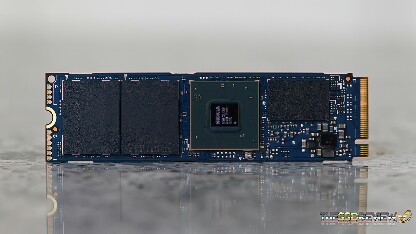
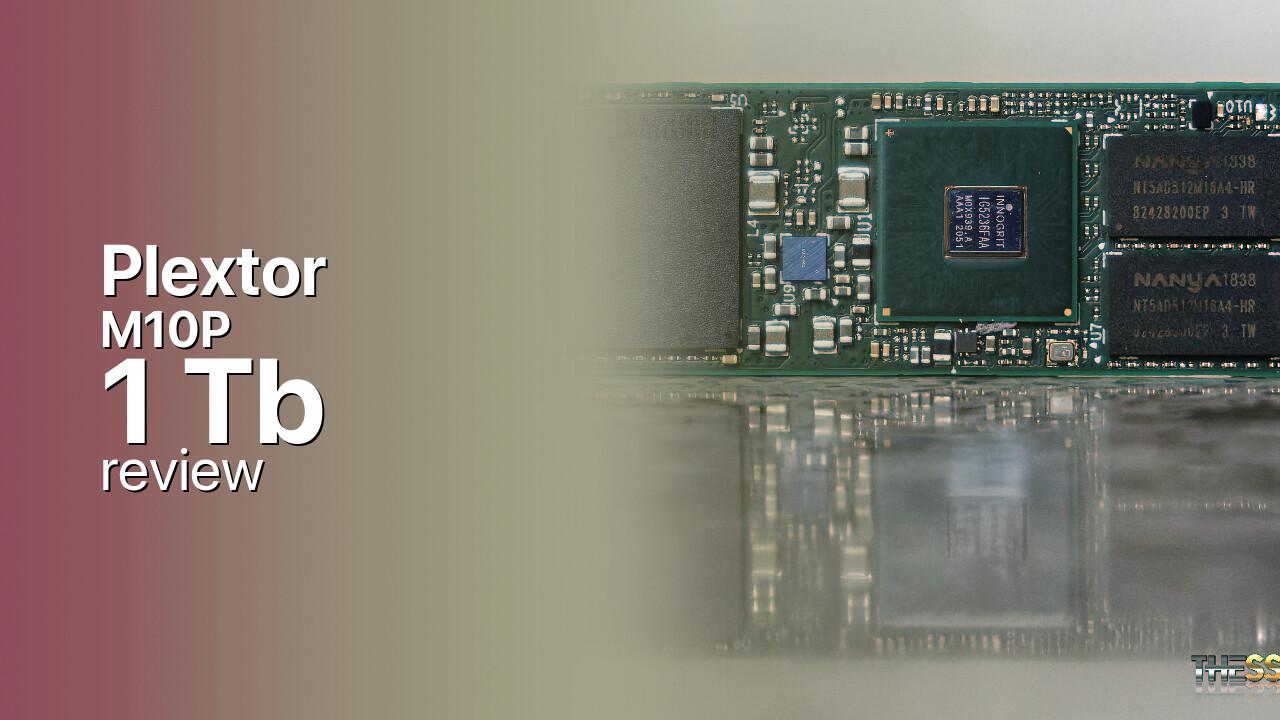
The Plextor M10P 1 TB is the middle capacity in Plextor's PCIe 4.0 line, and its standout is what sits underneath: Innogrit's eight-channel Rainier IG5236 controller rather than the Phison E18 that dominated Gen4 flagships in 2021. Plextor pairs it with Kioxia BiCS4 96-layer TLC NAND and two packages of NANYA DDR4 DRAM for the flash translation layer mapping table, plus a pseudo-SLC write cache on top. The result is a rated 7,000 MB/s sequential read and 5,000 MB/s sequential write, with up to 1.0 million random read IOPS and 800,000 random write IOPS on the spec sheet. Independent reviewers consistently measured the real-world random numbers lower, around 650,000 read and 530,000 write IOPS, which is normal for advertised peaks.
The M10P family spans 512 GB, 1 TB, and 2 TB, all sharing the same 7,000 MB/s read figure, while writes step up with capacity. The 512 GB is rated at 4,000 MB/s writes and 320 TBW, this 1 TB at 5,000 MB/s writes and 640 TBW, and the 2 TB tops the line at 1,280 TBW. Endurance therefore scales linearly at 640 TBW per terabyte, which is solid mainstream Gen4 territory. The whole line is built on a single-sided M.2 2280 PCB, which The SSD Review flagged as unusual even for the 2 TB sample, so the 1 TB clears thin-laptop and PS5 clearance without trouble.
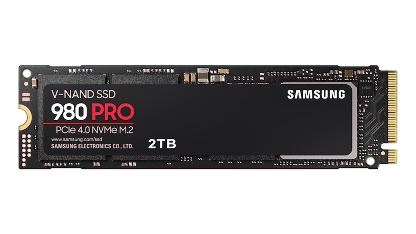
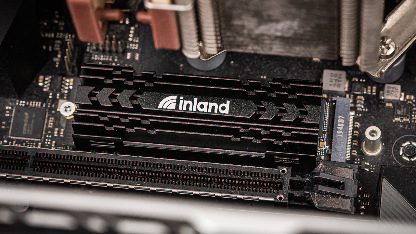
Compatibility is straightforward: PCIe 4.0 x4 on NVMe 1.4, PS5-ready on speed, and a single-sided PCB that fits laptops and the console's M.2 bay. The base M10P(GN) ships bare, while the M10P(G) adds a clip-on heatsink; either way, plan for some cooling on a PCIe 4.0 part under sustained writes. Against rivals, the obvious comparisons are the Phison E18-based Kingston KC3000 1 TB and Samsung's 990 Pro 1 TB, a PCIe 4.0 flagship running Samsung's own in-house Pablo controller rather than a Phison part — both of which match or slightly exceed the M10P on peak writes. The M10P's case is the alternative controller architecture and Kioxia BiCS4 NAND, which The SSD Review found delivered some of the best true-data and PCMark results in its class at launch. One honest caveat: Plextor's consumer SSD presence has thinned since Kioxia's restructuring, so availability and firmware support vary by region.
Storage Comparisons:
M10P Performance & Benchmarks
On the 1 TB M10P, Plextor rates sequential reads at 7,000 MB/s and sequential writes at 5,000 MB/s over a PCIe 4.0 x4 link, with random performance quoted at up to 1,000,000 read IOPS and 800,000 write IOPS. Those are full Gen4 numbers, and the eight-channel Innogrit IG5236 with its NANYA DDR4 mapping table is what holds random performance up as the drive fills.
Plextor M10P 1 TB vs M.2 4.0 x 4 peers
Switch between sequential throughput and random IOPS to see how this drive stacks up against other M.2 4.0 x 4 SSDs in our database. The highlighted bar is the drive on this page — click any other bar to open that drive.
- Patriot Viper PV593 1 TB: 14,500 MB/s read, 14,000 MB/s write
- Patriot Viper PV593 2 TB: 14,500 MB/s read, 14,000 MB/s write
- Patriot Viper PV593 4 TB: 14,500 MB/s read, 14,000 MB/s write
- Patriot Viper PV573 2 TB: 14,000 MB/s read, 12,000 MB/s write
- Plextor M10P 1 TB (this drive): 7,000 MB/s read, 5,000 MB/s write
In daily use, that puts the M10P alongside any PCIe 4.0 flagship from its 2021 launch window. Game load times are bounded by CPU and asset decompression, so the M10P feels indistinguishable from the Phison E18-based Kingston KC3000 or Samsung's in-house-controller 990 Pro in most titles. The payoff for the bandwidth shows up in large sequential workloads: moving a 100 GB project folder, scrubbing 4K footage in a video editor, or feeding DirectStorage titles that stream textures straight from the SSD.
Like every TLC NVMe, the M10P leans on a pseudo-SLC cache that absorbs writes at full speed until it fills, after which writes settle to the native Kioxia TLC rate. On the 1 TB the cache is smaller than on the 2 TB, so a long contiguous write such as a 4K capture will drop to native speed sooner. Independent reviewers at Guru3D and The SSD Review found the IG5236 platform delivered consistently strong real-data and PCMark results, with measured random IOPS landing around 650,000 read and 530,000 write rather than the rated peaks, which tracks the usual gap between spec-sheet and sustained throughput.
Plextor M10P vs Competitors
See how the M10P stacks up against other M.2 4.0 x 4 drives in our database:
Compare with rival drives:
Endurance, TBW & Warranty
Plextor covers the M10P 1 TB with a five-year limited warranty that ends early if the 640 TBW endurance rating is exceeded, whichever comes first. That 640 TBW figure sits in a lineup that scales from 320 TBW on the 512 GB through 640 TBW on this 1 TB to 1,280 TBW on the 2 TB, holding a steady 640 TBW per terabyte. At a fairly heavy consumer workload of 20 GB of writes per day, the drive would need roughly 87 years to wear out the NAND, so in practice the warranty term expires long before the flash does. Even a professional pipeline pushing 100 GB a day would take more than 17 years. Plextor rates the drive at 2 million hours MTBF, but treat that as a population-reliability statistic: it describes expected failures across a large fleet, not a guarantee for any single unit. RMAs run through Plextor's service channel, where availability can vary by region given the brand's reduced consumer footprint.
Plextor M10P 1 TB Specifications
| Category | Value |
|---|---|
| Capacity [?] | 1 TB |
| Interface [?] | M.2 4.0 x 4 |
| Controller [?] | Innogrit Rainier IG5236 |
| Memory type [?] | Kioxia TLC |
| DRAM [?] | DDR4 DRAM |
| Read speed (MB/s) [?] | 7000 |
| Write speed (MB/s) [?] | 5000 |
| Read IOPS [?] | 1000000 |
| Write IOPS [?] | 800000 |
| Endurance (TBW) [?] | 640 |
| MTBF (million hours) [?] | 2000000 |
| Warranty (years) [?] | 5 |
Verdict: Is the M10P Worth It in 2026?
The Plextor M10P 1 TB suits buyers who want a PCIe 4.0 flagship that deliberately steps off the Phison E18 conveyor, pairing Innogrit's IG5236 with Kioxia BiCS4 NAND and a genuine DDR4 cache. It is the wrong pick on a PCIe 3.0 board, where half the bandwidth goes unused, or when the strongest sustained writes in this tier matter most — there the E18-based Kingston KC3000 and its 7,000 MB/s rated writes pull ahead of the M10P's 5,000 MB/s. The closest direct alternative is the Kingston KC3000 1 TB: same PCIe 4.0 class, faster rated writes, and broader firmware and tooling support. We rate the 1 TB M10P as a competent, slightly off-mainstream Gen4 drive whose real caveats are Plextor's thinner consumer presence and regional availability, not any shortfall in the hardware itself.
+ Pros
- 7,000 MB/s sequential reads over PCIe 4.0
- Innogrit IG5236 eight-channel controller
- Kioxia BiCS4 96-layer TLC with DDR4
- 640 TBW endurance with five-year warranty
- Single-sided PCB fits thin laptops
- PS5-ready on speed and clearance
- 1.0 million random read IOPS rated
- Cons
- 5,000 MB/s writes trail E18 Gen4 flagships
- Plextor consumer presence and availability thin
- 2021 Gen4 release, not the newest platform
- Base GN variant ships with no heatsink
- Measured IOPS land below rated peaks
Buy this or similar SSD Storage:
Video Review
SSD Plextor M10P 1TB PCIe 4.0 PX-1TM10PG