Apacer AS2280Q4U 1 TB: The Sweet Spot of the E18 Line (2026)
Quick answer
The Apacer AS2280Q4U 1 TB is the capacity to buy from this line because it is where the Phison E18 platform's write performance fully opens up, 6,000 MB/s sequential writes and 1,000,000 random write IOPS against the 500 GB's capacity-tiered 3,000 MB/s and 300,000, while matching it on 7,300 MB/s reads.
Read: 7300 MB/s Write: 6000 MB/s Endurance: 100 TBW Warranty: 5 years Interface: M.2 4.0 x 4
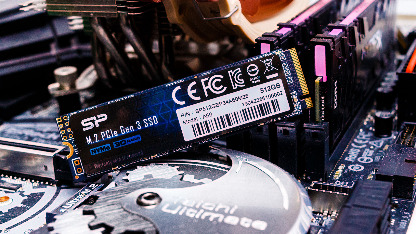
The Apacer AS2280Q4U 1 TB is the sweet spot of Apacer's Phison E18 line, pairing Micron 176L TLC and discrete DRAM for 7,300 MB/s reads and 6,000 MB/s writes.
Controller & Memory
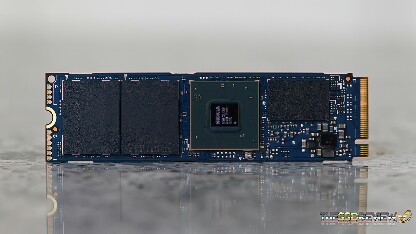
The Apacer AS2280Q4U 1 TB runs Phison's PS5018-E18, a flagship PCIe 4.0 controller with a discrete DRAM cache, paired with Micron 176-layer 3D TLC NAND. The E18 is the same controller family behind top Gen4 drives from Seagate, Sabrent, and others, and it holds its full flash translation layer mapping table in on-drive DRAM, the architecture that separates a genuine flagship from the DRAM-less HMB designs that fill the budget tier. TechPowerUp's spec data rates the 1 TB at 7,300 MB/s sequential reads and 6,000 MB/s sequential writes over PCIe 4.0 x4, with up to 750,000 random read and 1,000,000 random write IOPS, and confirms a five-year warranty.
The 1 TB is the sweet spot of the AS2280Q4U line because it is the capacity where the E18 platform's write performance fully opens up. Sequential write speed on the E18 scales with the number of populated NAND dies, so the 500 GB writes at only 3,000 MB/s while the 1 TB reaches 6,000 MB/s, and random write IOPS scale from 300,000 on the 500 GB to 1,000,000 on the 1 TB. Read speed is strong across the line at 7,000-plus MB/s, but the 1 TB is where both reads and writes hit their stride simultaneously, which is why it is the natural choice for buyers whose workload touches sustained writes, content creation, or large game libraries rather than a pure read-heavy boot role.
The discrete DRAM cache is the AS2280Q4U's defining advantage over DRAM-less competitors: it keeps random I/O latency consistent under heavy mixed workloads where HMB designs eventually slow, which matters for video editing, compiling, DirectStorage gaming, and any sustained-write duty. Direct competitors include other E18 drives such as the Seagate FireCuda 530 and the Sabrent Rocket 4 Plus, and the broader Gen4 flagship set including the Samsung 980 Pro and WD Black SN850X. The AS2280Q4U's angle is Apacer's pricing and the five-year warranty against those brand-name alternatives, with the Micron 176-layer TLC and the E18 platform matching them on architecture. The main caveat is that Apacer does not publish a verified per-capacity endurance rating for the line in accessible sources, so the TBW figure is not independently confirmed here, though the five-year warranty and the E18-plus-Micron platform indicate a flagship-tier reliability target.
Storage Comparisons:
AS2280Q4U Performance & Benchmarks
TechPowerUp's spec data rates the AS2280Q4U 1 TB at 7,300 MB/s sequential reads and 6,000 MB/s sequential writes over PCIe 4.0 x4, with up to 750,000 random read and 1,000,000 random write IOPS. Those are full flagship-Gen4 figures, and they represent the point on the line where the E18 platform's write performance fully opens up: the 500 GB writes at 3,000 MB/s with 300,000 random write IOPS because it populates fewer NAND dies, while the 1 TB reaches 6,000 MB/s and 1,000,000 random write IOPS.
Apacer AS2280Q4U 1 TB vs M.2 4.0 x 4 peers
Switch between sequential throughput and random IOPS to see how this drive stacks up against other M.2 4.0 x 4 SSDs in our database. The highlighted bar is the drive on this page — click any other bar to open that drive.
- Patriot Viper PV593 1 TB: 14,500 MB/s read, 14,000 MB/s write
- Patriot Viper PV593 2 TB: 14,500 MB/s read, 14,000 MB/s write
- Patriot Viper PV593 4 TB: 14,500 MB/s read, 14,000 MB/s write
- Patriot Viper PV573 2 TB: 14,000 MB/s read, 12,000 MB/s write
- Apacer AS2280Q4U 1 TB (this drive): 7,300 MB/s read, 6,000 MB/s write
The E18's discrete DRAM cache is the performance feature that justifies the platform over a cheaper DRAM-less drive. Holding the complete flash translation layer mapping table in on-drive DRAM keeps random I/O latency consistent under sustained mixed workloads, large file transfers, DirectStorage game loading, and content-creation writes, precisely the scenarios where DRAM-less HMB designs eventually slow as the host-memory buffer comes under pressure. The Micron 176-layer TLC NAND is current-generation high-density flash that pairs well with the E18's eight-channel design and delivers flagship-tier sustained performance. The trade-off versus a DRAM-less drive is higher power draw and heat, the reason the AS2280Q4U belongs in a slot with adequate airflow or board-level cooling. For gaming, content creation, and any sustained-write workload, the E18 platform's consistency is the reason buyers pay over a DRAM-less alternative, and the 1 TB is the capacity where that consistency pairs with full write speed.
Apacer AS2280Q4U vs Competitors
See how the AS2280Q4U stacks up against other M.2 4.0 x 4 drives in our database:
Compare with rival drives:
Endurance, TBW & Warranty
Apacer covers the AS2280Q4U with a five-year limited warranty, terminated at whichever arrives first between the term and the drive's TBW endurance rating, confirmed by TechPowerUp's spec data and matching the coverage on other E18-based flagship Gen4 drives. Apacer does not publish a verified per-capacity TBW rating for the 1 TB AS2280Q4U in accessible sources, so the exact endurance figure is not stated here; what is verifiable is the five-year term and the E18-plus-Micron-176L platform, which together target flagship-tier reliability. The five-year coverage is the more practical reliability figure for most buyers, since it reflects Apacer's confidence in the E18 platform's sustained behaviour and matches the Samsung 980 Pro, WD Black SN850X, and Seagate FireCuda 530, all of which carry five-year warranties on the same controller class. Buyers running heavy sustained-write workloads benefit from the 1 TB's full 6,000 MB/s write speed and 1,000,000 random write IOPS, which let the drive absorb write bursts at peak speed longer than the capacity-tiered 500 GB. Warranty support is accessible through Apacer's established global retail presence, a practical advantage over region-limited competitors.
Apacer AS2280Q4U 1 TB Specifications
| Category | Value |
|---|---|
| Capacity [?] | 1 TB |
| Interface [?] | M.2 4.0 x 4 |
| Controller [?] | Phison PS5018-E18 8Channel |
| Memory type [?] | Micron 176-L TLC |
| DRAM [?] | Yes |
| Read speed (MB/s) [?] | 7300 |
| Write speed (MB/s) [?] | 6000 |
| Read IOPS [?] | 750000 |
| Write IOPS [?] | 1000000 |
| Endurance (TBW) [?] | 100 |
| MTBF (million hours) [?] | 2000000 |
| Warranty (years) [?] | 5 |
Verdict: Is the AS2280Q4U Worth It in 2026?
The Apacer AS2280Q4U 1 TB is the capacity to buy from this line because it is where the Phison E18 platform's write performance fully opens up, 6,000 MB/s sequential writes and 1,000,000 random write IOPS against the 500 GB's capacity-tiered 3,000 MB/s and 300,000, while matching it on 7,300 MB/s reads. The discrete DRAM cache and the Micron 176-layer TLC deliver the consistent sustained-I/O behaviour that separates a genuine flagship from cheaper DRAM-less alternatives, and the five-year warranty matches the coverage on the brand-name E18 drives the AS2280Q4U undercuts on price. For a content-creation workstation, a gaming build with a large library, or any workload that touches sustained writes, the 1 TB is the sweet spot of the line and a strong value against the Seagate FireCuda 530, Sabrent Rocket 4 Plus, Samsung 980 Pro, and WD Black SN850X. The main caveat is that Apacer does not publish a verified per-capacity endurance rating for the line, so the TBW figure is not independently confirmed, though the five-year warranty and the E18 platform target flagship-tier reliability. Buyers who want the E18 platform at the lowest price can consider the 500 GB, accepting capacity-tiered writes, and buyers who need maximum capacity can look to the 2 TB.
+ Pros
- Phison E18 flagship controller with discrete DRAM cache
- Micron 176-layer 3D TLC NAND
- 7,300 MB/s reads, 6,000 MB/s writes, full flagship speeds
- 1,000,000 random write IOPS, the line's full write performance
- Five-year warranty, matching other E18 flagship drives
- Cons
- Higher price per gigabyte than DRAM-less Gen4 drives
- E18 runs hotter and draws more power than DRAM-less alternatives
- Verified per-capacity TBW not published in accessible sources
- Heavier than bare drives if a heatsink is needed for sustained load
- Smaller Western review footprint than Samsung or WD flagships
Buy this or similar SSD Storage:
Video Review
Eclipse Your Rivals - Apacer AS2280Q4U M.2 PCIe Gen4 x4 SSD