Hikvision G4000E 1TB: a budget DRAM-less PCIe 4.0 SSD (2026)
Quick answer
The Hikvision G4000E 1TB suits budget builders and PS5 owners who want a straightforward PCIe 4.0 upgrade over SATA without paying for DRAM they won't fully use in typical desktop workloads.
Read: 5100 MB/s Write: 4200 MB/s Endurance: 880 TBW Warranty: 1 years Interface: M.2 4.0 x 4
The Hikvision G4000E 1TB is a DRAM-less PCIe 4.0 NVMe drive built to undercut mainstream rivals on price while still clearing PS5's minimum interface requirements.
Controller & Memory
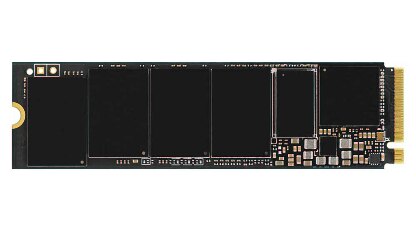
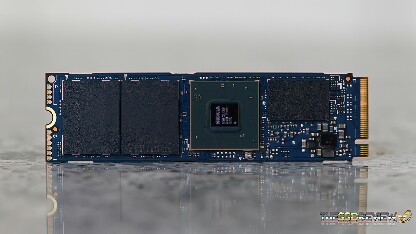
Hikvision built the G4000E around a Maxio MAP1602 controller paired with YMTC 3D TLC NAND, the same controller family found in its flagship G4000 but without a DRAM chip on board. Instead, the drive leans on Host Memory Buffer (HMB) to borrow a slice of system RAM for its mapping table, which keeps cost and power draw down at the expense of some sustained performance. It connects over PCIe 4.0 x4 in the standard M.2 2280 form factor, single-sided, with a thin graphene heat-spreader sticker in place of an aluminum heatsink.
The G4000E sits one tier below Hikvision's own G4000 series, which tops out at 7,450 MB/s reads and 6,600 MB/s writes on the same 1 TB capacity - the E suffix marks the cost-reduced, DRAM-less variant. It also ships in 512 GB and 2 TB capacities; the 512 GB model is noticeably slower on writes (2,500 MB/s), so the 1 TB strikes the better balance of the family for anyone weighing capacity against speed.
Without a tall heatsink, the G4000E fits laptops, mini-ITX builds, and the PS5's internal M.2 slot without spacing issues, though desktop users running it under sustained load may still want to add a motherboard heatsink. In its price bracket it lines up against DRAM-less rivals like the WD Blue SN580 and Crucial P3 Plus, both of which trade similar sequential speeds for the same missing-DRAM compromise.
Storage Comparisons:
G4000E Performance & Benchmarks
Hikvision rates the 1 TB G4000E at up to 5,100 MB/s sequential reads and 4,200 MB/s sequential writes over PCIe 4.0 x4 - solidly ahead of any PCIe 3.0 or SATA drive, though short of DRAM-equipped flagships that clear 7,000 MB/s. Hikvision does not publish random IOPS for the 1 TB capacity; the 512 GB sibling is rated at roughly 430,000 read / 530,000 write IOPS, which is a reasonable proxy for what the 1 TB drive delivers day to day and is well within normal territory for a DRAM-less Maxio design.
Hikvision G4000E 1 TB vs M.2 4.0 x 4 peers
Switch between sequential throughput and random IOPS to see how this drive stacks up against other M.2 4.0 x 4 SSDs in our database. The highlighted bar is the drive on this page — click any other bar to open that drive.
- Patriot Viper PV593 1 TB: 14,500 MB/s read, 14,000 MB/s write
- Patriot Viper PV593 2 TB: 14,500 MB/s read, 14,000 MB/s write
- Patriot Viper PV593 4 TB: 14,500 MB/s read, 14,000 MB/s write
- Patriot Viper PV573 2 TB: 14,000 MB/s read, 12,000 MB/s write
- Hikvision G4000E 1 TB (this drive): 5,100 MB/s read, 4,200 MB/s write
Like other HMB drives, the G4000E leans on an SLC write cache to hit its peak numbers; once a large sustained transfer exhausts that cache, write speeds drop closer to the native TLC ceiling. For everyday use - booting Windows, loading games, general multitasking - that cache limit rarely gets touched and the drive feels as responsive as pricier DRAM alternatives. It's a weaker fit for video editors moving hundreds of gigabytes of 4K footage in one sitting, where a DRAM-cached drive holds its sequential speed more consistently past the cache wall.
Hikvision G4000E vs Competitors
See how the G4000E stacks up against other M.2 4.0 x 4 drives in our database:
Compare with rival drives:
Endurance, TBW & Warranty
Hikvision rates the 1 TB G4000E for 880 TBW of total endurance. At a typical desktop workload of 20-50 GB written per day, that budget lasts roughly 48 to 120 years before the rated limit is reached - far beyond the drive's practical service life, so endurance is not a realistic concern for mainstream use. The MTBF rating is 2,000,000 hours, a statistical reliability figure describing failure rates across a large population of drives rather than a promise for any individual unit.
Warranty coverage is inconsistent across the retailers selling this SKU: some list a 1-year local warranty tied to the 1 TB capacity, while listings for the smaller 512 GB model in other regions show coverage as long as 5 years. That gap likely reflects retailer or regional policy rather than a single global Hikvision warranty term, so buyers should confirm the exact coverage period with their point of sale before purchase.
Hikvision G4000E 1 TB Specifications
| Category | Value |
|---|---|
| Capacity [?] | 1 TB |
| Interface [?] | M.2 4.0 x 4 |
| Controller [?] | Maxio MAP1602 |
| Memory type [?] | YMTC 3D TLC |
| DRAM [?] | No |
| Read speed (MB/s) [?] | 5100 |
| Write speed (MB/s) [?] | 4200 |
| Read IOPS [?] | 5100000 |
| Write IOPS [?] | 4200000 |
| Endurance (TBW) [?] | 880 |
| MTBF (million hours) [?] | 2000000 |
| Warranty (years) [?] | 1 |
Verdict: Is the G4000E Worth It in 2026?
The Hikvision G4000E 1TB suits budget builders and PS5 owners who want a straightforward PCIe 4.0 upgrade over SATA without paying for DRAM they won't fully use in typical desktop workloads. It's a weaker choice for video editors or anyone doing sustained multi-hundred-gigabyte transfers, where the missing DRAM cache and HMB-only design show up once the SLC cache empties. Buyers who need steadier sustained writes at a similar price should look at the WD Blue SN580, which offers more consistent performance past its own cache limit. Overall, the G4000E 1TB is a reasonable value pick for casual gaming and general storage, provided the buyer confirms the actual warranty term with their retailer first.
+ Pros
- 5,100 MB/s sequential reads on PCIe 4.0
- 880 TBW endurance rating on the 1 TB model
- DRAM-less design keeps power draw low
- Single-sided M.2 2280 fits PS5 and thin laptops
- Graphene heat spreader needs no separate heatsink
- 2,000,000-hour MTBF rating
- Cons
- Sequential read sits just under Sony's 5,500 MB/s PS5 guidance
- Warranty term varies noticeably by retailer
- No DRAM cache limits sustained large-file transfers
- Random IOPS not published for the 1 TB capacity
Buy this or similar SSD Storage:



Video Review
Super speed storage for affordable pricing! - Hiksemi Future 1TB NVMe SSD review