Lexar NM710 1TB Review — the Budget Range's Sweet Spot (2026)
Quick answer
Buy the Lexar NM710 1TB when the budget sets the ceiling but the drive should not feel like a compromise: it is the cheapest sane way to get full-speed PCIe 4.0 reads, real 4,500 MB/s writes, and a 5-year warranty into a build.
Read: 5000 MB/s Write: 4500 MB/s Endurance: 600 TBW Warranty: 5 years Interface: M.2 4.0 x 4
The Lexar NM710 1TB keeps the full 4,500 MB/s write speed and doubles endurance to 600 TBW, making it the sensible pick of Lexar's budget PCIe 4.0 range.
Controller & Memory
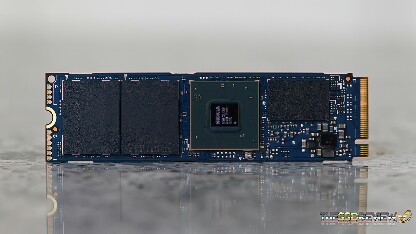
The Lexar NM710 1TB runs the same deliberately budgeted platform as its siblings: a Maxio MAP1602 controller working four channels with no DRAM on board, Host Memory Buffer borrowing system RAM for the mapping tables, and a dynamic pseudo-SLC cache absorbing write bursts in front of Micron 176-layer TLC NAND per the launch-era specifications. It is an M.2 2280 stick on PCIe 4.0 x4, rated at 5,000 MB/s reads and 4,500 MB/s writes — and at 1 TB, both of those numbers are the real deal rather than a capacity downgrade.
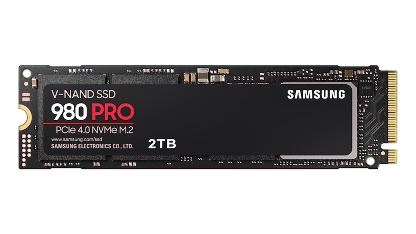
That is what makes this the sweet spot of the range. The 512 GB model loses a third of its write speed, dropping to 2,600 MB/s, and carries half the endurance at 300 TBW; the 1 TB model keeps the full 4,500 MB/s rating and doubles the endurance budget to 600 TBW. The 2 TB model above adds capacity but gives back a sliver of read speed, rating 4,850 MB/s. Across the line, the 5-year warranty and 1.5 million-hour MTBF rating carry unchanged — generous terms for a budget drive. One tier up sits Lexar's own NM790, which trades 5,000 MB/s reads for 7,400 MB/s and doubles endurance again to 1,000 TBW.
The audience is the budget boot-and-library builder: a first PCIe 4.0 system, an office workstation, or a secondary game drive. Against same-tier rivals like the Kingston NV2 and WD Blue SN580, the NM710 1TB competes squarely on ratings and warranty terms, while its DRAM-less design keeps heat and power low for small cases and laptops. Anyone with sustained write workloads, or hopes of a PS5 upgrade, should look a tier higher.
Storage Comparisons:
NM710 Performance & Benchmarks
Lexar rates the 1TB NM710 at 5,000 MB/s sequential reads and 4,500 MB/s writes over PCIe 4.0 x4, and notably publishes no random IOPS figures for this model — TechPowerUp's database lists them as officially unknown. What is documented comes from TechPowerUp's full 1TB review, which found the drive delivering its rated sequential speeds and behaving the way a MAP1602 DRAM-less design should: strong burst transfers, ordinary deep-queue random performance.
Lexar NM710 1 TB vs M.2 4.0 x 4 peers
Switch between sequential throughput and random IOPS to see how this drive stacks up against other M.2 4.0 x 4 SSDs in our database. The highlighted bar is the drive on this page — click any other bar to open that drive.
- Patriot Viper PV593 1 TB: 14,500 MB/s read, 14,000 MB/s write
- Patriot Viper PV593 2 TB: 14,500 MB/s read, 14,000 MB/s write
- Patriot Viper PV593 4 TB: 14,500 MB/s read, 14,000 MB/s write
- Patriot Viper PV573 2 TB: 14,000 MB/s read, 12,000 MB/s write
- Lexar NM710 1 TB (this drive): 5,000 MB/s read, 4,500 MB/s write
In use, the numbers translate simply. Boot times, application launches, and level loads feel identical to pricier Gen4 drives, because read latency at these speeds stopped being the bottleneck years ago. The 4,500 MB/s write rating holds for typical transfers, with the dynamic pSLC cache absorbing game installs and file copies before throughput settles to native TLC rates on very large sustained copies. As a DRAM-less HMB design, heavy random write sessions are where it trails DRAM-equipped drives — a non-issue for boot-and-games duty. Against any SATA drive, including fast ones, it is not a contest: this is a full generational jump at budget money.
Lexar NM710 vs Competitors
See how the NM710 stacks up against other M.2 4.0 x 4 drives in our database:
Compare with rival drives:
Endurance, TBW & Warranty
Lexar backs the NM710 1TB with a 5-year limited warranty rated to 600 TBW, whichever arrives first. At a modest 20 GB of writes per day, that endurance budget stretches past eight decades, so within a realistic ownership window the TBW ceiling is effectively unreachable. The rated MTBF is 1.5 million hours — a fleet-level reliability statistic, not a promise about any individual stick. The same 5-year terms apply across the whole NM710 range, from the 300 TBW of the 512 GB model up through the 2 TB, which is unusually generous coverage for the budget tier where 3-year warranties remain common. Warranty claims run through Lexar directly in most regions, so keeping proof of purchase is worthwhile.
Lexar NM710 1 TB Specifications
| Category | Value |
|---|---|
| Capacity [?] | 1 TB |
| Interface [?] | M.2 4.0 x 4 |
| Controller [?] | Maxio MAP1602A 4 Channel |
| Memory type [?] | Micron 176-L TLC |
| DRAM [?] | No |
| Read speed (MB/s) [?] | 5000 |
| Write speed (MB/s) [?] | 4500 |
| Read IOPS [?] | |
| Write IOPS [?] | |
| Endurance (TBW) [?] | 600 |
| MTBF (million hours) [?] | 1500000 |
| Warranty (years) [?] | 5 |
Verdict: Is the NM710 Worth It in 2026?
Buy the Lexar NM710 1TB when the budget sets the ceiling but the drive should not feel like a compromise: it is the cheapest sane way to get full-speed PCIe 4.0 reads, real 4,500 MB/s writes, and a 5-year warranty into a build. Skip it for sustained professional write loads, or as a PS5 upgrade — 5,000 MB/s reads sit just under Sony's 5,500 MB/s recommendation, and DRAM-less designs are the wrong tool for scratch-disk duty. The step-up option inside the family is the NM790 1TB, with 7,400 MB/s reads and 1,000 TBW for somewhat more money; the Kingston NV2 and WD Blue SN580 play the same budget game with their own trade-offs. Within its class, the NM710 1TB is the balanced pick.
+ Pros
- 5,000 MB/s reads and 4,500 MB/s writes
- 600 TBW endurance with 5-year warranty
- DRAM-less HMB design stays cool and efficient
- Full write speed, unlike the 512 GB model
- Cons
- No DRAM cache on the PCB
- Reads trail mainstream rivals at 5,000 MB/s
- Random IOPS ratings unpublished by Lexar
- Just misses Sony's 5,500 MB/s PS5 guidance
Buy this or similar SSD Storage:
Video Review
Lexar NM710 SSD 1TB Review | Blazing Fast Storage!