MSI Spatium M480 Pro 1TB Review — Phison E18, Maxed Out (2026)
Quick answer
The MSI Spatium M480 Pro 1TB earns its place as a boot-and-games drive for buyers who want top-tier Gen4 burst, a hardware DRAM cache and 700 TBW of 5-year-warranty endurance from the proven E18 platform.
Read: 7400 MB/s Write: 6000 MB/s Endurance: 700 TBW Warranty: 5 years Interface: M.2 4.0 x 4
The MSI Spatium M480 Pro 1TB pushes Phison's proven E18 platform to 7,400 MB/s reads with 700 TBW of endurance, and it remains one of Gen4's savviest enthusiast picks.
Controller & Memory
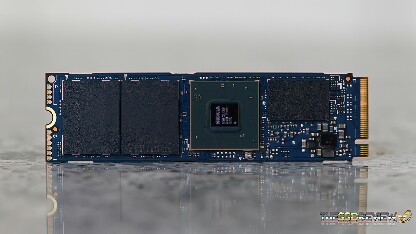
The MSI Spatium M480 Pro 1TB is the entry point into MSI's E18 flagship line, and it carries the full Gen4 hardware recipe: Phison's eight-channel PS5018-E18 controller, Micron 176-layer 3D TLC NAND, 1 GB of DDR4 DRAM for the translation tables, AES-256 hardware encryption, and a PCIe 4.0 x4 interface in the universal M.2 2280 form factor. MSI rates this capacity at 7,400 MB/s sequential reads and 6,000 MB/s sequential writes, and a graphene thermal pad sits under the label, with a heatsink-equipped variant higher up the SKU list.
The range spans 1 TB, 2 TB and 4 TB, and the 1 TB is the only variant whose ratings get trimmed: writes top out at 6,000 MB/s here against 7,000 MB/s on the larger models, and random reads are rated at 750K IOPS instead of 1M. Endurance scales from 700 TBW to 1,400 TBW and 3,000 TBW under the same 5-year warranty. The Pro sits above the older Spatium M480, which pairs the same controller with Micron 96-layer NAND and a 7,000 MB/s ceiling, and beside the PS5-oriented M480 Play.
This capacity suits enthusiasts who want near-top Gen4 burst for boot and game duty without stepping up to the larger capacities. Against the WD Black SN850X and Samsung 980 Pro, the M480 Pro's argument is its platform pedigree — the same E18 recipe that powers the ADATA XPG Gammix S70 Blade and Corsair's MP600 family — while MSI's contribution is a restrained design, graphene cooling and five years of cover. Independent reviews of the 2 TB model, which shares this platform, back the hardware: TechPowerUp and wccftech both found it running at the front of the Gen4 pack.
Storage Comparisons:
Spatium M480 Pro Performance & Benchmarks
MSI rates the 1 TB Spatium M480 Pro at 7,400 MB/s sequential reads and 6,000 MB/s sequential writes, plus 750K random-read and 1 million random-write IOPS — the read-side trim versus the 2 TB and 4 TB models being the one spec concession at this capacity. Those are manufacturer ratings, but the platform has strong independent coverage: TechPowerUp's 2 TB review measured a roughly 192 GB SLC cache with burst writes starting near 5 GB/s, and wccftech's verdict was that MSI had squeezed essentially everything Phison's E18 can deliver.
MSI Spatium M480 Pro 1 TB vs M.2 4.0 x 4 peers
Switch between sequential throughput and random IOPS to see how this drive stacks up against other M.2 4.0 x 4 SSDs in our database. The highlighted bar is the drive on this page — click any other bar to open that drive.
- Patriot Viper PV593 1 TB: 14,500 MB/s read, 14,000 MB/s write
- Patriot Viper PV593 2 TB: 14,500 MB/s read, 14,000 MB/s write
- Patriot Viper PV593 4 TB: 14,500 MB/s read, 14,000 MB/s write
- Patriot Viper PV573 2 TB: 14,000 MB/s read, 12,000 MB/s write
- MSI Spatium M480 Pro 1 TB (this drive): 7,400 MB/s read, 6,000 MB/s write
The 1 TB model carries a proportionally smaller pseudo-SLC cache, so it fills sooner under large transfers — a non-event for boot, gaming and everyday duty, and a consideration only for multi-hundred-gigabyte video exports. Game and level loading on a 7,400 MB/s-class drive sits within a margin of error of any other top Gen4 SSD, and the 1M random-write rating keeps the desktop responsive when installs and background copies pile up. Thermals deserve respect on a bare E18 drive: wccftech's reviewer recommends airflow or the heatsink variant for sustained loads, so plan on a motherboard heatsink or a well-ventilated M.2 slot rather than running the bare drive under a hot GPU.
MSI Spatium M480 Pro vs Competitors
See how the Spatium M480 Pro stacks up against other M.2 4.0 x 4 drives in our database:
Compare with rival drives:
Endurance, TBW & Warranty
MSI covers the Spatium M480 Pro 1TB with a 5-year limited warranty rated to 700 TBW of host writes, whichever arrives first. That endurance budget works out to roughly 380 GB of writes per day across the full warranty term; at a more typical 20 GB per day, the flash is rated to outlast the calendar by around nine decades, so the warranty clock is the practical limit. MTBF is rated up to 1.6 million hours — a fleet-level statistic, not a promise for any single drive. The drive carries AES-256 hardware encryption, end-to-end data path protection and LDPC error correction, and warranty claims run through MSI's support channels with proof of purchase rather than through the retailer.
MSI Spatium M480 Pro 1 TB Specifications
| Category | Value |
|---|---|
| Capacity [?] | 1 TB |
| Interface [?] | M.2 4.0 x 4 |
| Controller [?] | Phison 5018-E18-41 8 Channel |
| Memory type [?] | Micron 176-L TLC |
| DRAM [?] | Yes |
| Read speed (MB/s) [?] | 7400 |
| Write speed (MB/s) [?] | 6000 |
| Read IOPS [?] | 750000 |
| Write IOPS [?] | 1000000 |
| Endurance (TBW) [?] | 700 |
| MTBF (million hours) [?] | 1600000 |
| Warranty (years) [?] | 5 |
Verdict: Is the Spatium M480 Pro Worth It in 2026?
The MSI Spatium M480 Pro 1TB earns its place as a boot-and-games drive for buyers who want top-tier Gen4 burst, a hardware DRAM cache and 700 TBW of 5-year-warranty endurance from the proven E18 platform. Skip it if sustained write speed matters to the task at hand — the 2 TB and 4 TB Pro models carry the full 7,000 MB/s rating — or if a cheaper DRAM-less drive such as the Lexar NM790 covers the same loads. Among like-for-like rivals, the WD Black SN850X remains the safer brand bet and the Samsung 980 Pro the more polished package; this MSI is the pick when its price dips below either at retail.
+ Pros
- 7,400 MB/s rated sequential reads
- 700 TBW endurance with 5-year warranty
- 1 GB DDR4 DRAM cache buffer
- 1M random-write IOPS rating
- Micron 176-layer TLC NAND
- Heatsink variant available
- Cons
- Writes rated 6,000 MB/s, below 2 TB and 4 TB models
- Runs hot without a heatsink or good airflow
- Random reads trimmed to 750K IOPS at 1 TB
- Slow SLC cache recovery after very large writes
- Costs more than DRAM-less Gen4 rivals
Buy this or similar SSD Storage:



Video Review
MSI SPATIUM M480 PRO 1TB PCIe 4.0 M.2 NVMe SSD