Seagate FireCuda 530R 4TB Review — Built to Outlast the Platform (2026)
Quick answer
The Seagate FireCuda 530R 4TB is an archive-and-create drive: video editors, photographers and collectors who will write hundreds of terabytes over the years and want flash, warranty and in-lab data recovery rated for that abuse.
Read: 7400 MB/s Write: 6800 MB/s Endurance: 5050 TBW Warranty: 5 years Interface: M.2 4.0 x 4
The Seagate FireCuda 530R 4TB is the endurance champion of its line — 7,400 MB/s reads, 5,050 TBW rated endurance and a bundled 3-year Rescue recovery plan.

Controller & Memory
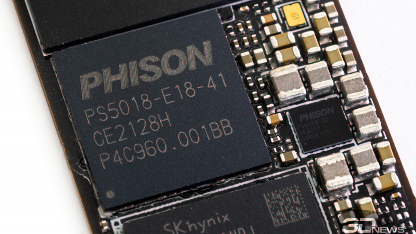
The Seagate FireCuda 530R 4TB, launched in 2024, is the top capacity of Seagate's reliability-focused Gen4 flagship — a specialized variant of the FireCuda 530 rather than a successor, in Tom's Hardware's framing. The platform is Phison's PS5018-E18-41 controller, 4 GB of DDR4 DRAM at the ideal 1 GB-per-terabyte ratio, and Kioxia BiCS6 162-layer TLC rated for 3,000 program-erase cycles over PCIe 4.0 x4. Ratings sit at 7,400 MB/s sequential reads, 6,800 MB/s writes and 1,300K random IOPS in both directions — the IOPS figure running well above typical E18 drives and pointing at workstation duty.
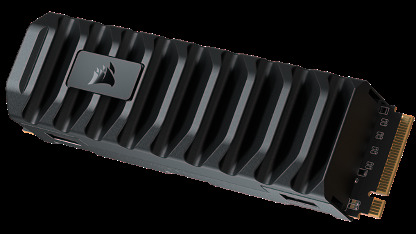
Endurance is where this capacity makes its name: 5,050 TBW, roughly double what competing Gen4 drives rate per terabyte, and more than double the 2,400 TBW that the Samsung 990 Pro 4TB and WD Black SN850X 4TB carry. The family scales 1,100, 2,400 and 5,050 TBW with writes stepping 7,000, 6,900 and 6,800 MB/s. Physically the drive is double-sided and rated to 8.9 W active power — the hottest configuration in the family — so the heatsink variant, model numbers ending in 073, is the practical choice in a PS5 or a cramped case.
Against the 990 Pro, SN850X and Crucial's T500, the 530R's argument is coverage: a 5-year warranty plus 3-year Rescue Data Recovery Services behind flash rated to be written far harder than the class norm. The concessions are the aging E18 platform and average power efficiency, both noted in Tom's Hardware's review. For archive-class duty, that coverage is the more relevant specification.
Storage Comparisons:
Firecuda 530R Performance & Benchmarks
Seagate rates the 4 TB 530R at 7,400 MB/s sequential reads, 6,800 MB/s writes and 1,300K random read/write IOPS — manufacturer figures on the proven E18 platform. At this capacity the story is consistency under load rather than peak numbers: the 4 GB DRAM cache keeps random access steady across a large address space, and the write rating trails the 1 TB model by just 200 MB/s despite quadrupling the capacity. Game loading, application launches and general desktop behavior are indistinguishable from any other top-band Gen4 drive.
Seagate Firecuda 530R 4 TB vs M.2 4.0 x 4 peers
Switch between sequential throughput and random IOPS to see how this drive stacks up against other M.2 4.0 x 4 SSDs in our database. The highlighted bar is the drive on this page — click any other bar to open that drive.
- Patriot Viper PV593 1 TB: 14,500 MB/s read, 14,000 MB/s write
- Patriot Viper PV593 2 TB: 14,500 MB/s read, 14,000 MB/s write
- Patriot Viper PV593 4 TB: 14,500 MB/s read, 14,000 MB/s write
- Patriot Viper PV573 2 TB: 14,000 MB/s read, 12,000 MB/s write
- Seagate Firecuda 530R 4 TB (this drive): 7,400 MB/s read, 6,800 MB/s write
Sustained writing is where big-capacity flagships earn their keep, and the 530R's specification is built for it: a pseudo-SLC cache absorbs bursts, and behind it sits flash rated for 5,050 TBW — headroom that matters to creators offloading hundreds of gigabytes daily. Tom's Hardware's family testing lists decent sustained writes among the strengths and average power efficiency among the weaknesses, with active power rated at 8.9 W on this capacity — the highest in the line — making the heatsink version the sensible pick for sustained sessions. Against a Samsung 990 Pro 4TB or WD Black SN850X 4TB, real-world differences sit at the margins; the endurance rating and recovery plan are the meaningful separation.
Seagate Firecuda 530R vs Competitors
See how the Firecuda 530R stacks up against other M.2 4.0 x 4 drives in our database:
Compare with rival drives:
Endurance, TBW & Warranty
The 4 TB model carries 5,050 TBW of endurance — roughly 0.69 drive writes per day across the 5-year term, and about double the rating of the Samsung 990 Pro 4TB or WD Black SN850X 4TB. At 20 GB of writes per day the budget would take nearly 700 years to exhaust; even at a creator's 100 GB daily, the flash outlives several warranty terms. The 5-year limited warranty comes with 3-year Rescue Data Recovery Services, Seagate's in-lab recovery plan for data lost to drive failure — a meaningful hedge on an archive-class drive. The rated 1.8 million hours MTBF is a fleet statistic rather than a per-unit promise. Claims run through Seagate's standard support channels with proof of purchase.
Seagate Firecuda 530R 4 TB Specifications
| Category | Value |
|---|---|
| Capacity [?] | 4 TB |
| Interface [?] | M.2 4.0 x 4 |
| Controller [?] | Phison PS5018-E18- 8 Channel |
| Memory type [?] | Kioxia 162-L TLC |
| DRAM [?] | Yes |
| Read speed (MB/s) [?] | 7400 |
| Write speed (MB/s) [?] | 6800 |
| Read IOPS [?] | 1300000 |
| Write IOPS [?] | 1300000 |
| Endurance (TBW) [?] | 5050 |
| MTBF (million hours) [?] | 1800000 |
| Warranty (years) [?] | 5 |
Verdict: Is the Firecuda 530R Worth It in 2026?
The Seagate FireCuda 530R 4TB is an archive-and-create drive: video editors, photographers and collectors who will write hundreds of terabytes over the years and want flash, warranty and in-lab data recovery rated for that abuse. Skip it for laptops — the double-sided PCB, 8.9 W active draw and average efficiency make newer platforms better mobile citizens — and for pure peak-speed bragging rights, where the Samsung 990 Pro and WD Black SN850X hold the floor. For big capacity whose worst case is covered twice over, this is the most defensible 4 TB Gen4 purchase in the Seagate range. The 5,050 TBW rating means even a heavy creator workload will not dent the coverage.
+ Pros
- 5,050 TBW endurance rating — double the 4TB rivals
- 7,400/6,800 MB/s rated speeds
- 1,300K rated random IOPS both ways
- 4 GB DDR4 DRAM, 1 GB per terabyte
- 5-year warranty plus 3-year Rescue recovery
- Cons
- Double-sided PCB complicates thin-laptop fit
- 8.9W active power, highest in the family
- Aging E18 platform with average power efficiency
- Writes trail the 1TB model's 7,000 MB/s rating
Buy this or similar SSD Storage:



Video Review
THE FASTEST M.2 Drive I've EVER SEEN! - Seagate FireCuda 530