Silicon Power US75 1TB Review — Slim Gen4 With Room to Breathe (2026)
Quick answer
Buy the Silicon Power US75 1TB when a slim, bare, cool-running Gen4 drive with top-band read ratings and TLC flash is the goal — boot drive plus a real game rotation is exactly what this capacity is for.
Read: 7400 MB/s Write: 6000 MB/s Endurance: 600 TBW Warranty: 5 years Interface: M.2 4.0 x 4
The Silicon Power US75 1TB pairs top-band 7,400 MB/s rated reads with 600 TBW of endurance on an 8-gram bare board — the sensible middle of its line.
Controller & Memory
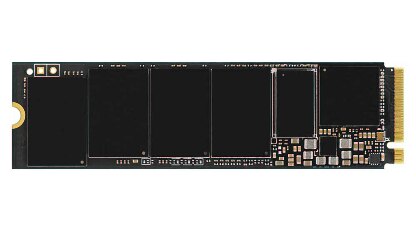
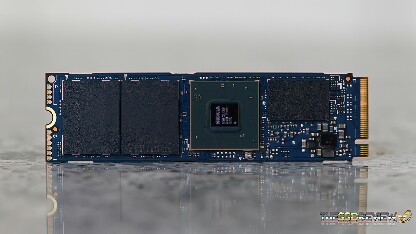
The Silicon Power US75 1TB runs Maxio's MAP1602 four-channel controller in a DRAM-less Host Memory Buffer configuration, with YMTC's 232-layer 3D TLC behind it and NVMe 1.4 over PCIe 4.0 x4. Silicon Power's spec table rates this capacity at 7,400 MB/s sequential reads and 6,000 MB/s writes — the highest read rating in the family, though the 2 TB and 4 TB models write faster at 6,500 MB/s. The card itself is a bare, slim M.2 2280: 22.0 x 80.0 x 3.6 mm, 8 grams, single-sided, no heatsink, so it fits thin laptops and crowded slots that heatsink-equipped drives cannot.
At 1 TB the drive stops being a mere boot disk and becomes a genuine system drive: an operating system, a meaningful game rotation and everyday files coexist, with 600 TBW of endurance under a 5-year warranty — double the 512 GB model's budget and a quarter of the 4 TB's 2,400 TBW. A heatsink-equipped US75 SKU exists in Silicon Power's catalog, but the standard card relies on a motherboard slot with basic airflow, which reviewers found sufficient: Tom's Hardware's US75 testing described a drive that runs efficiently and cool even bare.
The competitive set is the value Gen4 tier — the WD Blue SN580, Kingston NV3 and Crucial P3 Plus. Against them, the US75's 1 TB combines top-band rated reads with TLC provenance (the P3 Plus uses QLC) and strong rated writes for the class. It is positioned for buyers who want near-flagship paper specs and a cool-running platform without paying flagship prices.
Storage Comparisons:
US75 Performance & Benchmarks
Silicon Power rates the 1 TB US75 at 7,400 MB/s sequential reads and 6,000 MB/s writes, with no official IOPS figure published. The read figure puts it in the top Gen4 band — boot times, application launches and DirectStorage game streaming see everything PCIe 4.0 offers — while the 6,000 MB/s write rating handles 100 GB game installs without drama, just 500 MB/s behind the larger models' rating. In desktop use, the gap between this and any 7,000-plus MB/s rival is imperceptible outside of sustained transfers.
Silicon Power US75 1 TB vs M.2 4.0 x 4 peers
Switch between sequential throughput and random IOPS to see how this drive stacks up against other M.2 4.0 x 4 SSDs in our database. The highlighted bar is the drive on this page — click any other bar to open that drive.
- Patriot Viper PV593 1 TB: 14,500 MB/s read, 14,000 MB/s write
- Patriot Viper PV593 2 TB: 14,500 MB/s read, 14,000 MB/s write
- Patriot Viper PV593 4 TB: 14,500 MB/s read, 14,000 MB/s write
- Patriot Viper PV573 2 TB: 14,000 MB/s read, 12,000 MB/s write
- Silicon Power US75 1 TB (this drive): 7,400 MB/s read, 6,000 MB/s write
The DRAM-less architecture works through Host Memory Buffer and a pseudo-SLC cache: bursts land at rated speed, and once the cache fills during very large transfers, throughput settles to native TLC rates. At 1 TB the cache is large enough that gaming installs and routine file work rarely expose the transition. Thermals are a family trait — Tom's Hardware's review of the 2 TB US75 found it runs efficiently and cool, FunkyKit's testing measured similar low temperatures, and the 1 TB card carries fewer NAND packages under the same conditions, so a slot with basic motherboard airflow is all the cooling this drive expects. Independent benchmark data on this exact capacity remains thin; the manufacturer ratings are the reference points.
Silicon Power US75 vs Competitors
See how the US75 stacks up against other M.2 4.0 x 4 drives in our database:
Compare with rival drives:
Endurance, TBW & Warranty
Silicon Power covers the US75 1TB with a 5-year limited warranty rated to 600 TBW, whichever arrives first — confirmed by TechPowerUp's database entry and B&H's retail listing. That budget equals roughly 328 GB of writes per day across the warranty term; at a realistic 50 GB per day the endurance outlasts the warranty by two decades, so the 5-year term is the practical limit. The MTBF is rated at 1.5 million hours, a fleet-level statistic rather than a per-unit lifespan promise. Sibling capacities scale to 300 TBW (512 GB), 1,200 TBW (2 TB) and 2,400 TBW (4 TB). Warranty claims go through Silicon Power's regional support network with proof of purchase, and most buyers will deal with the retailer first.
Silicon Power US75 1 TB Specifications
| Category | Value |
|---|---|
| Capacity [?] | 1 TB |
| Interface [?] | M.2 4.0 x 4 |
| Controller [?] | Maxio MAP1602 |
| Memory type [?] | YMTC 232-L TLC |
| DRAM [?] | No |
| Read speed (MB/s) [?] | 7400 |
| Write speed (MB/s) [?] | 6000 |
| Read IOPS [?] | n/a |
| Write IOPS [?] | n/a |
| Endurance (TBW) [?] | 600 |
| MTBF (million hours) [?] | 1500000 |
| Warranty (years) [?] | 5 |
Verdict: Is the US75 Worth It in 2026?
Buy the Silicon Power US75 1TB when a slim, bare, cool-running Gen4 drive with top-band read ratings and TLC flash is the goal — boot drive plus a real game rotation is exactly what this capacity is for. Skip it for sustained bulk writes, where the 6,000 MB/s rating and DRAM-less design trail the 2 TB and 4 TB US75 models, and skip the whole line if a heatsink is required out of the box. The Crucial P3 Plus competes on price with slower-degrading QLC flash, while the WD Blue SN580 trades rated speed for brand familiarity. Within its tier, this 1 TB model is a quietly well-balanced pick. Match it to a case with basic airflow and it asks for nothing else.
+ Pros
- 7,400 MB/s rated reads — top Gen4 band
- 600 TBW endurance with 5-year warranty
- Slim 8 g single-sided board fits thin laptops
- YMTC 232-layer TLC, not QLC
- Runs cool even without a heatsink
- Cons
- Writes rated 6,000 MB/s, below larger US75 models
- No heatsink included
- DRAM-less design with HMB only
- Sustained writes settle after the SLC cache fills
Buy this or similar SSD Storage:



Video Review
🚀 Silicon Power US75 SSD Review | The BEST Gen4 NVME SSD for Under $100!