Western Digital Black SN770M Gaming Mini 1TB Review — Handheld Sweet Spot (2026)
Quick answer
The Western Digital Black SN770M Gaming Mini 1TB is the model to buy from WD's 2230 line: it pairs the family's peak 740K random-read rating with full 5,150/4,900 MB/s speeds, double the 500 GB's endurance, and a native fit for the Steam Deck, ROG Ally and ultrathin laptops.
Read: 5150 MB/s Write: 4900 MB/s Endurance: 600 TBW Warranty: 5 years Interface: M.2 4.0 x 4
The Western Digital Black SN770M Gaming Mini 1TB is the configuration of WD's native 2230 handheld drive where the full 5,150 MB/s rating and peak 740K random-read IOPS land.
Controller & Memory
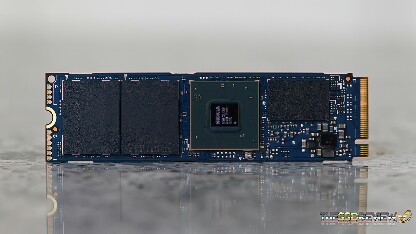
The Western Digital Black SN770M Gaming Mini 1TB is the centre of gravity in WD's first M.2 2230 drive family. The platform was engineered for the 30 x 22 mm slot used by handheld gaming PCs — Steam Deck, ROG Ally, Legion Go — and by ultrathin laptops, with a single-sided 2.4 mm PCB weighing 2.8 grams, a DRAM-less in-house WD controller, BiCS5 112-layer TLC and the nCache 4.0 hybrid SLC caching scheme. At 1 TB this variant carries the family's best ratings: 5,150 MB/s sequential reads, 4,900 MB/s writes, and a range-topping 740K random-read and 800K random-write IOPS. The smaller 500 GB gives up 150 MB/s of each sequential figure and 280K of random reads; the 2 TB keeps the speeds but cedes the random-read peak.
Compatibility defines the audience. In a Steam Deck the drive mounts natively but runs at PCIe 3.0 speed, since the Deck's slot is Gen3; in the ROG Ally and other Gen4 handhelds it operates at its full rating. WD also markets the line for ultrathin notebooks, where the short 2230 PCB is often the only thing that fits. ServeTheHome's 1TB review delivered a positive verdict on the platform, and KitGuru's testing of the 2 TB sibling measured 5,207/4,904 MB/s in CrystalDiskMark — above the official ratings — which speaks well of the shared hardware.
The competition at 1 TB in 2230 is thin but real: Crucial's P310 rates faster on paper, and Corsair's MP600 Mini plays the same niche. The SN770M's case is the WD Black support package, five years of warranty, and a design validated specifically for handhelds — where thermals, power draw and physical fit matter more than a couple of hundred MB/s on a box.
Storage Comparisons:
Black SN770M Gaming Mini Performance & Benchmarks
WD rates the 1TB SN770M at 5,150 MB/s sequential reads, 4,900 MB/s writes, and 740K/800K random read/write IOPS — the peak random-read figure of the family and the full-speed rating the 500 GB misses. Independent coverage backs the platform: ServeTheHome's 1TB review came back positive, and KitGuru's 2 TB review measured 5,207/4,904 MB/s in CrystalDiskMark and 827K write IOPS in its peak-performance profile, numbers at or above the official claims. In a Gen4 handheld such as the ROG Ally, game loads and shader compilation run at exactly this level.
Western Digital Black SN770M Gaming Mini 1 TB vs M.2 4.0 x 4 peers
Switch between sequential throughput and random IOPS to see how this drive stacks up against other M.2 4.0 x 4 SSDs in our database. The highlighted bar is the drive on this page — click any other bar to open that drive.
- Patriot Viper PV593 1 TB: 14,500 MB/s read, 14,000 MB/s write
- Patriot Viper PV593 2 TB: 14,500 MB/s read, 14,000 MB/s write
- Patriot Viper PV593 4 TB: 14,500 MB/s read, 14,000 MB/s write
- Patriot Viper PV573 2 TB: 14,000 MB/s read, 12,000 MB/s write
- Western Digital Black SN770M Gaming Mini 1 TB (this drive): 5,150 MB/s read, 4,900 MB/s write
Inside the Steam Deck the PCIe 3.0 slot caps throughput at Gen3 speeds — still a large upgrade over most stock drives. The 800K random-write rating is the standout spec for handheld duty: installs, shader caches and save writes stay responsive while the OS shares the disk. Sustained behaviour is standard DRAM-less practice — the nCache 4.0 pseudo-SLC cache absorbs install-sized bursts, and very long transfers settle to native TLC rates. Power efficiency is a genuine handheld attribute, extending battery life relative to hungrier Gen4 drives, and the tiny single-sided PCB runs cool even in cramped console interiors, where KitGuru measured a 60 °C peak on the 2 TB model under a heatsink.
Western Digital Black SN770M Gaming Mini vs Competitors
See how the Black SN770M Gaming Mini stacks up against other M.2 4.0 x 4 drives in our database:
Compare with rival drives:
Endurance, TBW & Warranty
WD backs the SN770M 1TB with a 5-year limited warranty rated to 600 TBW of writes, whichever arrives first — double the 500 GB's 300 TBW and half the 2 TB's 1,200 TBW, with the peak ratings of the family to boot. Six hundred terabytes allows roughly 32 GB of writes per day across the warranty term; handheld gaming and laptop duty write a fraction of that, so the 5-year term is the practical limit. The official datasheet rates reliability at 1.8 million hours MTBF, a population statistic rather than a promise for any single unit. Support runs through WD's standard channels, with the WD Black dashboard software managing firmware updates and drive health.
Western Digital Black SN770M Gaming Mini 1 TB Specifications
| Category | Value |
|---|---|
| Capacity [?] | 1 TB |
| Interface [?] | M.2 4.0 x 4 |
| Controller [?] | WD in-house |
| Memory type [?] | BiCS 5 112-layer 3D TLC |
| DRAM [?] | No |
| Read speed (MB/s) [?] | 5150 |
| Write speed (MB/s) [?] | 4900 |
| Read IOPS [?] | 740000 |
| Write IOPS [?] | 800000 |
| Endurance (TBW) [?] | 600 |
| MTBF (million hours) [?] | 1800000 |
| Warranty (years) [?] | 5 |
Verdict: Is the Black SN770M Gaming Mini Worth It in 2026?
The Western Digital Black SN770M Gaming Mini 1TB is the model to buy from WD's 2230 line: it pairs the family's peak 740K random-read rating with full 5,150/4,900 MB/s speeds, double the 500 GB's endurance, and a native fit for the Steam Deck, ROG Ally and ultrathin laptops. Skip it only if a fixed budget forces the 500 GB or if a genuinely huge game library needs the 2 TB's 1,200 TBW. Crucial's P310 is the on-paper rival with faster rated numbers, but WD's handheld-specific validation, thermal record and 5-year support make a stronger overall case. As a handheld upgrade, this is the configuration that balances capacity, speed and cost best.
+ Pros
- Family-peak 740K random-read IOPS rating
- 5,150/4,900 MB/s sequential ratings
- 600 TBW endurance with 5-year warranty
- Native M.2 2230 for Steam Deck and ROG Ally
- Efficient single-sided 2.4 mm design
- Cons
- No DRAM cache on the PCB
- Runs at PCIe 3.0 speed inside the Steam Deck
- Half the endurance budget of the 2 TB model
- Fewer 2230 options means pricing moves slowly
Buy this or similar SSD Storage:



Video Review
WD Black SN770 NVME SSD Review