Western Digital SN5000 1TB Review — WD Blue's Mainstream Gen4 Successor (2026)
Quick answer
Buy the Western Digital SN5000 1TB if the priority is a proven, efficient mainstream Gen4 boot drive with brand provenance behind the controller, flash and firmware — 5,150 MB/s reads, 600 TBW and five years of coverage make it an easy recommendation for desktop and laptop builders.
Read: 5150 MB/s Write: 4900 MB/s Endurance: 600 TBW Warranty: 5 years Interface: M.2 4.0 x 4
Successor to the popular SN580, the Western Digital SN5000 1TB pairs 5,150 MB/s reads with a 730K random-read rating and a 5-year warranty.
Controller & Memory
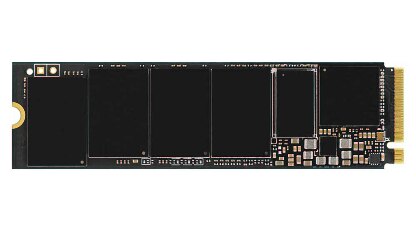
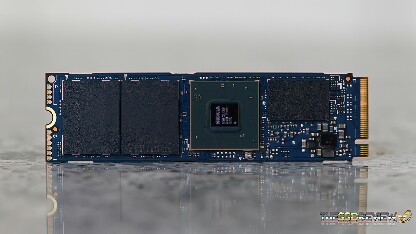
The Western Digital SN5000 1TB is one of the most vertically integrated mainstream drives on the market: WD designed the DRAM-less controller, sources the Kioxia BiCS5 112-layer TLC flash through the flash venture it co-owns, and writes the firmware. The single-sided M.2 2280 board runs on PCIe 4.0 x4 and NVMe 1.4, rated at 5,150 MB/s sequential reads and 4,900 MB/s writes with 730K random-read and 770K random-write IOPS. Instead of a DRAM chip, the controller leans on Host Memory Buffer and WD's nCache 4.0 hybrid SLC caching scheme, the same approach the WD Black SN850 family uses. ServeTheHome's 1TB review highlighted exactly this in-house stacking and found little on the board from third parties.
Launched in 2024 as the successor to the WD Blue SN580, the SN5000 range spans 500 GB to 4 TB. This 1 TB model is the spec-complete centre of the line: it carries the family's full 730K random-read rating and a 600 TBW endurance budget, whereas the 4 TB model switches to BiCS6 QLC NAND and the 500 GB variant gives up 150 MB/s of read speed and drops to 460K IOPS. Against its predecessor it is a clear step up — the SN580 topped out at 4,150 MB/s and 600K random reads. WD's own WD Black SN7100 covers buyers who want 7,000 MB/s-class throughput instead.
Competition at this tier is tight. Samsung's 990 EVO Plus and Crucial's T500 both rate faster on paper, and the T500 adds a true DRAM cache, while Kingston's NV3 undercuts on price with a QLC-or-TLC parts lottery. The case for the SN5000 1TB is whole-stack provenance, a 5-year warranty and the power efficiency that matters in laptops. No heatsink is included; most motherboards ship with one, and PS5 upgraders would need to supply their own. For a boot drive plus a mid-size game library in a WD-validated package, this is the configuration of the range most people should buy.
Storage Comparisons:
SN5000 Performance & Benchmarks
WD rates the 1TB SN5000 at 5,150 MB/s sequential reads, 4,900 MB/s writes, 730K random-read IOPS and 770K random-write IOPS — manufacturer figures, but the family has credible independent coverage. ServeTheHome's 1TB review delivered a positive verdict for the platform, and Dong Knows Tech reached a similar conclusion while praising the efficiency gains over the SN580. In practice, 5,150 MB/s reads load Windows, games and DirectStorage titles with no perceptible penalty against 7,000 MB/s-class drives, and 4,900 MB/s writes clear 100 GB game installs quickly.
Western Digital SN5000 1 TB vs M.2 4.0 x 4 peers
Switch between sequential throughput and random IOPS to see how this drive stacks up against other M.2 4.0 x 4 SSDs in our database. The highlighted bar is the drive on this page — click any other bar to open that drive.
- Patriot Viper PV593 1 TB: 14,500 MB/s read, 14,000 MB/s write
- Patriot Viper PV593 2 TB: 14,500 MB/s read, 14,000 MB/s write
- Patriot Viper PV593 4 TB: 14,500 MB/s read, 14,000 MB/s write
- Patriot Viper PV573 2 TB: 14,000 MB/s read, 12,000 MB/s write
- Western Digital SN5000 1 TB (this drive): 5,150 MB/s read, 4,900 MB/s write
The DRAM-less fine print applies. nCache 4.0 carves a pseudo-SLC cache out of the TLC: burst writes ride it at rated speed, and very large sustained transfers eventually settle to native flash rates once it exhausts. For boot-and-games duty that behaviour is a non-event; for constant multi-hundred-gigabyte video scratch work, a DRAM-equipped drive such as the Crucial T500 holds up better. Random performance is the quiet strength here — the 730K/770K ratings sit at the top of the DRAM-less Gen4 class and keep the drive responsive when games, browsers and launchers share the queue. Thermals pose no problems for a low-power DRAM-less build in a motherboard's ventilated M.2 slot, so a heatsink is optional rather than required.
Western Digital SN5000 vs Competitors
See how the SN5000 stacks up against other M.2 4.0 x 4 drives in our database:
Compare with rival drives:
Endurance, TBW & Warranty
WD backs the SN5000 1TB with a 5-year limited warranty rated to 600 TBW of writes, whichever arrives first. Endurance scales down the range to 300 TBW on the 500 GB model and up to 900 TBW on the 2 TB, with the QLC-based 4 TB rated at 1,200 TBW. At a typical 20 GB of writes per day, the 600 TBW budget stretches beyond 80 years, so the warranty term is the practical limit for any consumer workload. Support runs through WD's standard channels, with the WD Dashboard utility handling firmware updates and drive-health monitoring. ServeTheHome called the 600 TBW rating right in line with class standards — not generous, not stingy.
Western Digital SN5000 1 TB Specifications
| Category | Value |
|---|---|
| Capacity [?] | 1 TB |
| Interface [?] | M.2 4.0 x 4 |
| Controller [?] | WD in-house |
| Memory type [?] | BiCS 5 112-layer 3D TLC |
| DRAM [?] | No |
| Read speed (MB/s) [?] | 5150 |
| Write speed (MB/s) [?] | 4900 |
| Read IOPS [?] | 730000 |
| Write IOPS [?] | 770000 |
| Endurance (TBW) [?] | 600 |
| MTBF (million hours) [?] | n/a |
| Warranty (years) [?] | 5 |
Verdict: Is the SN5000 Worth It in 2026?
Buy the Western Digital SN5000 1TB if the priority is a proven, efficient mainstream Gen4 boot drive with brand provenance behind the controller, flash and firmware — 5,150 MB/s reads, 600 TBW and five years of coverage make it an easy recommendation for desktop and laptop builders. Skip it if peak throughput or heavy sustained writes are the job: the 5,150 MB/s rating trails the 7,000 MB/s club, and DRAM-equipped rivals sustain better. The Crucial T500 is the faster enthusiast alternative, Kingston's NV3 is the cheaper entry point, and WD's own SN7100 is the in-family speed upgrade. As a default 1 TB Gen4 pick, it lands near the top of the mainstream class.
+ Pros
- 5,150 MB/s reads and 4,900 MB/s writes rated
- 730K random-read and 770K random-write IOPS
- 600 TBW endurance with 5-year warranty
- Fully in-house platform: controller, BiCS5 TLC flash, firmware
- Single-sided, low-power design suits laptops
- Cons
- No DRAM cache on the PCB
- Trails 7,000 MB/s-class Gen4 drives
- Sustained writes settle once the SLC cache exhausts
- No heatsink included
Buy this or similar SSD Storage:



Video Review
MOST IMPRESSIVE SSD yet - Cheaper & FASTER! | WD Blue SN5000 review