Seagate FireCuda 530R 1TB Review — Endurance-First PCIe 4.0 (2026)
Quick answer
The Seagate FireCuda 530R 1TB makes sense for buyers who weight warranty and endurance over the last few hundred megabytes per second: creators logging heavy daily writes, system builders who never want to think about the SSD again, and anyone drawn to the bundled Rescue recovery plan.
Read: 7400 MB/s Write: 7000 MB/s Endurance: 1100 TBW Warranty: 5 years Interface: M.2 4.0 x 4
The Seagate FireCuda 530R 1TB turns the proven E18 formula toward longevity — 7,400 MB/s reads, 1,100 TBW of endurance and a bundled 3-year Rescue recovery plan.

Controller & Memory
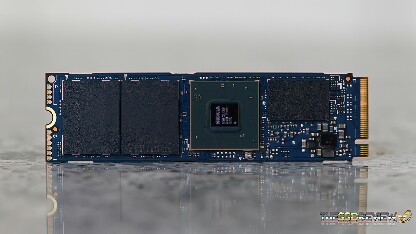
The Seagate FireCuda 530R 1TB, launched in 2024, is a reliability-focused variant of the FireCuda 530 rather than a successor — Tom's Hardware describes it exactly that way. The platform is familiar flagship Gen4: Phison's PS5018-E18-41 controller with a full gigabyte of DDR4 DRAM per terabyte, Kioxia BiCS6 162-layer TLC rated for 3,000 program-erase cycles, and PCIe 4.0 x4 on an M.2 2280 PCB. Seagate rates this capacity at 7,400 MB/s sequential reads, 7,000 MB/s writes and 1,300K random IOPS in both directions — an IOPS figure unusually high for an E18 drive that signals workstation intent as much as gaming.
The range spans 1 TB, 2 TB and 4 TB, with writes rated 7,000, 6,900 and 6,800 MB/s and endurance of 1,100, 2,400 and 5,050 TBW. Two physical details matter at purchase time: the PCB is double-sided, so very thin laptop slots need a clearance check, and the heatsink-equipped variant — model numbers ending in 073 — is the route that satisfies Sony's PS5 rules most easily. Microsoft DirectStorage is supported, and Seagate bundles 3-year Rescue Data Recovery Services with the 5-year warranty across the family.
The competitive set is the Gen4 flagship club: Samsung's 990 Pro, the WD Black SN850X and Crucial's T500. The 530R's argument is not top-of-chart speed but coverage — Tom's Hardware found its endurance ratings roughly double competing drives per terabyte — while the concessions are an aging E18 platform and power efficiency Tom's called merely average. Neither weakness changes the core appeal for endurance-focused buyers.
Storage Comparisons:
Firecuda 530R Performance & Benchmarks
Seagate rates the 1 TB 530R at 7,400 MB/s sequential reads, 7,000 MB/s writes and 1,300K random read/write IOPS, all manufacturer figures on the proven E18 platform. In the workloads that dominate a desktop — boots, game loading, application launches — the read rating behaves like every other 7,400 MB/s-class Gen4 drive, and the full DRAM pairing keeps random responsiveness steady under multitasking. The 1.3M IOPS rating is the specification oddity: it sits well above typical E18 drives and reflects Seagate's positioning of the 530R for creators and workstation duty as much as gaming.
Seagate Firecuda 530R 1 TB vs M.2 4.0 x 4 peers
Switch between sequential throughput and random IOPS to see how this drive stacks up against other M.2 4.0 x 4 SSDs in our database. The highlighted bar is the drive on this page — click any other bar to open that drive.
- Patriot Viper PV593 1 TB: 14,500 MB/s read, 14,000 MB/s write
- Patriot Viper PV593 2 TB: 14,500 MB/s read, 14,000 MB/s write
- Patriot Viper PV593 4 TB: 14,500 MB/s read, 14,000 MB/s write
- Patriot Viper PV573 2 TB: 14,000 MB/s read, 12,000 MB/s write
- Seagate Firecuda 530R 1 TB (this drive): 7,400 MB/s read, 7,000 MB/s write
Sustained writing is where E18 drives live or die on cache management, and the consensus from independent testing is that the 530R handles it respectably — Tom's Hardware's review lists decent sustained writes among its pros, while flagging the older platform's average power efficiency. A pseudo-SLC cache absorbs everyday bursts; very large sustained transfers eventually settle toward native TLC rates, as with any cache-managed Gen4 drive, and the 1 TB capacity carries the smallest cache in the range. For game loading, the practical difference against a Samsung 990 Pro or WD Black SN850X is marginal; for scratch-disk and repeated large-file duty, the high IOPS rating and endurance headroom are the relevant specifications.
Seagate Firecuda 530R vs Competitors
See how the Firecuda 530R stacks up against other M.2 4.0 x 4 drives in our database:
Compare with rival drives:
Endurance, TBW & Warranty
Endurance is rated at 1,100 TBW on the 1 TB model — roughly 0.6 drive writes per day across the 5-year term — scaling to 2,400 TBW at 2 TB and 5,050 TBW at 4 TB. Tom's Hardware notes those ratings run roughly double competing Gen4 drives per terabyte, and at 20 GB of writes per day the 1 TB budget stretches past 150 years, so the warranty term is the realistic limit. The 5-year limited warranty comes with 3-year Rescue Data Recovery Services, Seagate's in-lab recovery plan for data lost to drive failure. The rated 1.8 million hours MTBF is a population statistic across the fleet, not a per-unit promise. Claims run through Seagate's standard support channels with proof of purchase.
Seagate Firecuda 530R 1 TB Specifications
| Category | Value |
|---|---|
| Capacity [?] | 1 TB |
| Interface [?] | M.2 4.0 x 4 |
| Controller [?] | Phison PS5018-E18- 8 Channel |
| Memory type [?] | Kioxia 162-L TLC |
| DRAM [?] | Yes |
| Read speed (MB/s) [?] | 7400 |
| Write speed (MB/s) [?] | 7000 |
| Read IOPS [?] | 1300000 |
| Write IOPS [?] | 1300000 |
| Endurance (TBW) [?] | 1100 |
| MTBF (million hours) [?] | 1800000 |
| Warranty (years) [?] | 5 |
Verdict: Is the Firecuda 530R Worth It in 2026?
The Seagate FireCuda 530R 1TB makes sense for buyers who weight warranty and endurance over the last few hundred megabytes per second: creators logging heavy daily writes, system builders who never want to think about the SSD again, and anyone drawn to the bundled Rescue recovery plan. Skip it for thin-laptop builds — the double-sided PCB complicates clearance — or for maximum efficiency, where newer platforms win. Samsung's 990 Pro and WD Black SN850X remain the gaming-default picks, and Crucial's T500 undercuts on efficiency. As a high-endurance Gen4 flagship with unusual coverage, the 530R 1TB is a deliberate, defensible choice. For endurance-led purchases, Tom's Hardware's testing found few downsides to reinforce the case.
+ Pros
- 7,400/7,000 MB/s rated speeds
- 1,100 TBW endurance rating
- 1,300K rated random IOPS both ways
- 5-year warranty plus 3-year Rescue recovery
- Kioxia BiCS6 TLC rated 3,000 P/E cycles
- 1 GB DDR4 DRAM per terabyte
- Cons
- Double-sided PCB complicates thin-laptop fit
- Aging E18 platform with average power efficiency
- Endurance rated below the original FireCuda 530
- Heatsink version needed for easy PS5 install
Buy this or similar SSD Storage:
Video Review
THE FASTEST M.2 Drive I've EVER SEEN! - Seagate FireCuda 530