Team Group T-Create Classic C47 1TB: Endurance Comes First (2026)
Quick answer
The Team Group T-Create Classic C47 1TB makes sense for creators and general users who weigh warranty headroom as heavily as speed: 7,400/6,800 MB/s ratings, 1,000 TBW of endurance and five years of coverage is a combination few competitors offer at 1 TB.
Read: 7400 MB/s Write: 6800 MB/s Endurance: 1000 TBW Warranty: 5 years Interface: M.2 4.0 x 4
The Team Group T-Create Classic C47 1TB pairs near-maximum PCIe 4.0 reads with a 1,000 TBW endurance rating — double the protection most 1 TB drives offer.
Controller & Memory
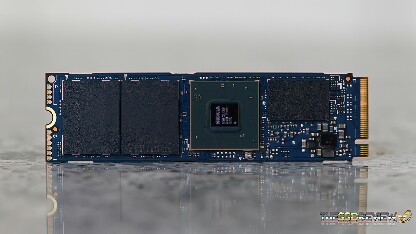
The Team Group T-Create Classic C47 1TB is built for one specific job: keeping a creative workstation fed with fast storage that does not flinch after years of daily writes. The hardware is the familiar high-value PCIe 4.0 recipe — Maxio's MAP1602A-F3C controller paired with YMTC 232-layer TLC NAND and no DRAM chip, leaning on Host Memory Buffer to borrow system RAM for the mapping tables. TeamGroup rates this single-sided M.2 2280 module at 7,400 MB/s reads and 6,800 MB/s writes over PCIe 4.0 x4, figures that sit at the practical ceiling of the interface.
Position inside the T-Create range matters here. The Classic C4 series splits into three speed tiers — C43 (3,000 MB/s), C45 (5,000 MB/s) and C47 — sold in 512 GB, 1 TB, 2 TB and 4 TB capacities. The 1 TB C47 is where the endurance story gets unusual: 1,000 TBW, roughly double the 600 TBW that 1 TB TLC drives typically carry, under a 5-year limited warranty. PCWorld, which tested the 2 TB sibling, called the TBW ratings across the range extremely generous. The spec sheet also carries TeamGroup's patented extra-slim graphene heat-spreader, and the module stays within standard 2280 dimensions, so it fits thin laptops and meets the PS5's size rules with a proper heatsink added.
Against rivals the honest picture is mixed. PCWorld found the C47 equal to competing PCIe 4.0 HMB drives in 48 GB real-world transfers and better than most at very long sustained writes, while trailing in synthetic benchmarks — the alternatives it named were the WD Black SN7100, WD Blue SN5100 and Lexar Play 2280. The Lexar NM790 uses the same Maxio platform with more retail presence. This drive fits the creator or all-round user who values warranty headroom and brand-backed endurance over leaderboard synthetic numbers, and who buys on price rather than peak benchmarks.
Storage Comparisons:
T Create Classic C47 Performance & Benchmarks
TeamGroup rates the 1 TB model at 7,400 MB/s sequential reads and 6,800 MB/s writes — near the ceiling of PCIe 4.0 x4 — and publishes no official random IOPS figure for the C47, so the measurements that matter are independent ones. PCWorld's testing of the 2 TB C47 gives the clearest picture of the platform: it finished second among PCIe 4.0 HMB drives in 48 GB transfer tests, matched rivals in everyday copying, and held between 2.45 GB/s and 195 GB/s across a 950 GB continuous write — a gradual folding curve rather than the hard cliff QLC drives show. After prolonged writing, native throughput settled at 500-800 MB/s, which PCWorld considered strong for TLC.
Team Group T Create Classic C47 1 TB vs M.2 4.0 x 4 peers
Switch between sequential throughput and random IOPS to see how this drive stacks up against other M.2 4.0 x 4 SSDs in our database. The highlighted bar is the drive on this page — click any other bar to open that drive.
- Patriot Viper PV593 1 TB: 14,500 MB/s read, 14,000 MB/s write
- Patriot Viper PV593 2 TB: 14,500 MB/s read, 14,000 MB/s write
- Patriot Viper PV593 4 TB: 14,500 MB/s read, 14,000 MB/s write
- Patriot Viper PV573 2 TB: 14,000 MB/s read, 12,000 MB/s write
- Team Group T Create Classic C47 1 TB (this drive): 7,400 MB/s read, 6,800 MB/s write
In daily use, the 1 TB C47 behaves like the mainstream Gen4 drive it is: operating systems, game loads and DirectStorage titles show no practical penalty against 7,000 MB/s-class competitors, and 100 GB-plus installs land quickly at cached speeds. The DRAM-less design shows only in unusual workloads — deep-queue random writes are its weakest synthetic area, PCWorld noted — though most desktop software rarely uses deep queues. Thermals are moderate for a DRAM-less board; FunkyKit recorded around 65 °C on the 2 TB model without supplementary cooling, so a ventilated motherboard slot or one of the M.2 heatsinks many boards ship with is sensible for sustained work.
Team Group T Create Classic C47 vs Competitors
See how the T Create Classic C47 stacks up against other M.2 4.0 x 4 drives in our database:
Compare with rival drives:
Endurance, TBW & Warranty
The 1 TB T-Create Classic C47 carries a 1,000 TBW endurance rating calculated to JEDEC write standards, backed by a 5-year limited warranty, whichever limit arrives first. That is roughly double the endurance most manufacturers attach to 1 TB TLC drives, and it translates to enormous headroom: at a heavy 50 GB of writes per day the budget would last more than 50 years, so the warranty term is the practical limit, not the flash. TeamGroup quotes MTBF of 1,700,000 hours for the series — a population statistic describing expected failure intervals across large fleets, not a promise for any individual drive. Endurance scales with capacity in this range: 500 TBW at 512 GB, 1,500 TBW at 2 TB and 3,000 TBW at 4 TB. Claims run through TeamGroup's regional support channels with proof of purchase, and coverage ends at whichever of the term or the TBW limit comes first.
Team Group T Create Classic C47 1 TB Specifications
| Category | Value |
|---|---|
| Capacity [?] | 1 TB |
| Interface [?] | M.2 4.0 x 4 |
| Controller [?] | Maxio MAP1602A-F3C |
| Memory type [?] | YMTC 232-L TLC |
| DRAM [?] | No |
| Read speed (MB/s) [?] | 7400 |
| Write speed (MB/s) [?] | 6800 |
| Read IOPS [?] | |
| Write IOPS [?] | |
| Endurance (TBW) [?] | 1000 |
| MTBF (million hours) [?] | 1700000 |
| Warranty (years) [?] | 5 |
Verdict: Is the T Create Classic C47 Worth It in 2026?
The Team Group T-Create Classic C47 1TB makes sense for creators and general users who weigh warranty headroom as heavily as speed: 7,400/6,800 MB/s ratings, 1,000 TBW of endurance and five years of coverage is a combination few competitors offer at 1 TB. Skip it if synthetic benchmark leadership is the goal — PCWorld found the WD Black SN7100 and Lexar Play 2280 ahead in random tests — or stretch to the 2 TB sibling, whose 7,000 MB/s writes and 1,500 TBW make it the better all-round package. For a long-warranty Gen4 drive with genuine YMTC NAND underneath, the C47 1 TB earns its shortlist place. It is also one of the few 1 TB drives whose endurance budget absorbs years of daily creator workloads with room to spare.
+ Pros
- 7,400/6,800 MB/s rated speeds
- 1,000 TBW endurance — double the 1 TB norm
- 5-year limited warranty
- Maxio MAP1602A-F3C with YMTC 232-layer TLC
- Sustained writes held 2.45 GB/s in PCWorld testing
- Single-sided M.2 2280 fits thin laptops
- Cons
- No DRAM cache; HMB-only design
- Trails WD SN7100 and Lexar Play in synthetic tests
- Writes rated 200 MB/s below the 2 TB model
- 512 GB variant drops to 4,800 MB/s writes
- No official IOPS rating published
Buy this or similar SSD Storage:
Video Review
T-CREATE CLASSIC GEN4 PCIe SSD | TEAMGROUP